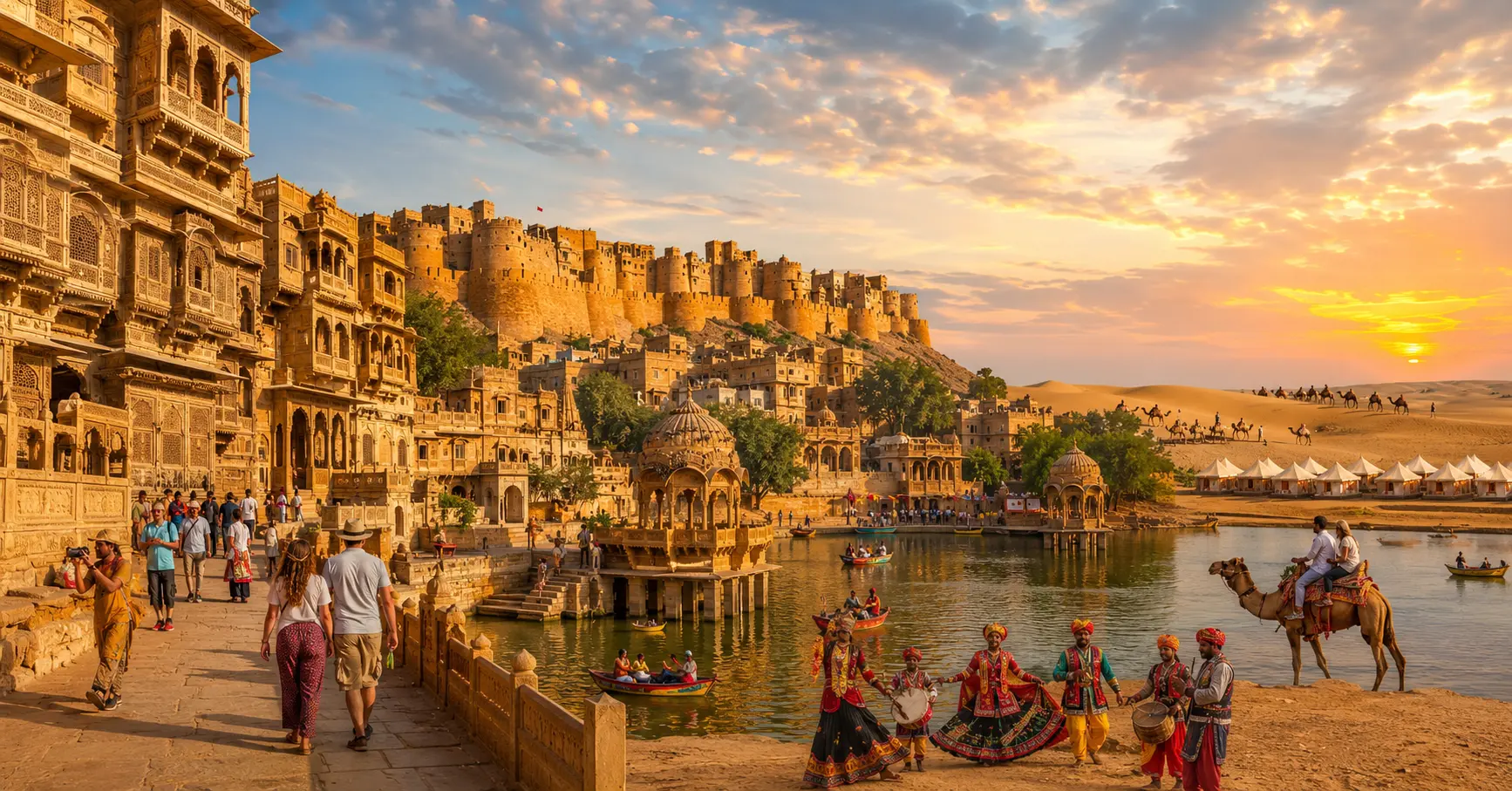
Jaisalmer turns everything gold. Furthermore, the sandstone city rising from the Thar Desert at sunset looks less like a real place and more like something a skilled novelist invented for dramatic effect.
Most notably, the places to visit in Jaisalmer include a UNESCO World Heritage living fort where families actually live, camel routes that traders walked for a thousand years, ancient Jain temples inside a military fortification, and sand dunes that stretch toward the Pakistan border.
As a result, Jaisalmer rewards travelers who come prepared – and this guide gives you everything you need before you arrive.
What You Will Learn
- The 15 best places to visit in Jaisalmer with entry fees and timings
- Things to do in Jaisalmer for couples, families, adventure seekers, and history lovers
- Jaisalmer best time to visit – honest seasonal advice for every traveler type
- Places to visit in Jaisalmer in 3 days – complete day-by-day itinerary
- Hidden Jaisalmer attractions most visitors miss entirely
- How to reach Jaisalmer and practical planning tips
Why Jaisalmer Is Unlike Any Other City in India
Rawal Jaisal founded Jaisalmer in 1156 CE on a Trikuta hill rising 80 metres above the surrounding desert. Furthermore, the city served as a major Silk Road trading hub for over 500 years before railway lines redirected commerce away from the desert.
Most notably, Jaisalmer Fort remains one of the world’s very few living forts – approximately 3,000 people live and work inside the battlements today. As a result, the fort experience involves walking among active families, hotels, and temples rather than through a preserved museum shell.
Furthermore, the entire city uses the same golden sandstone from local quarries. In particular, this geological uniformity means the city literally glows at sunrise and sunset – a visual phenomenon genuinely unique in the Indian subcontinent.
1. Jaisalmer Fort (Sonar Qila): The Living Golden Fortress
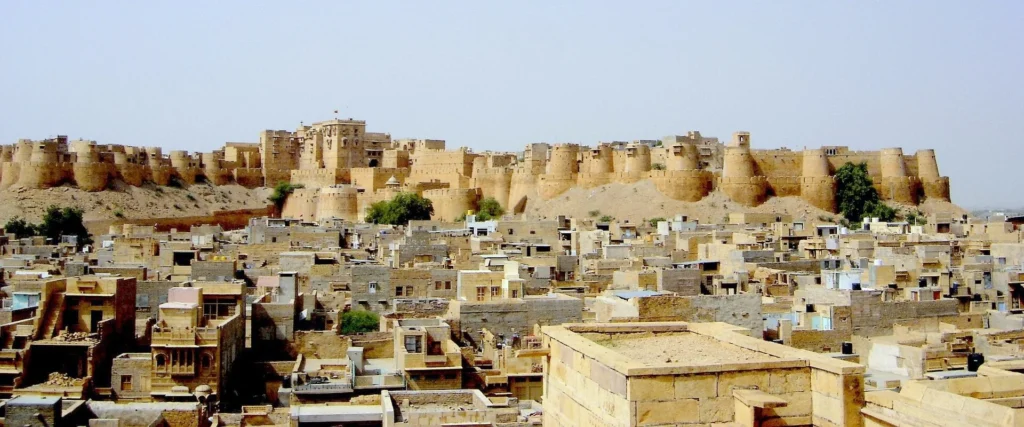
Jaisalmer Fort is the most essential of all places to visit in Jaisalmer. Furthermore, UNESCO designated it a World Heritage Site in 2013 as part of a five-fort Rajasthan designation that recognized its extraordinary architectural integrity.
About Jaisalmer Fort
Rawal Jaisal built the fort in 1156 CE atop the 80-metre Trikuta hill. Furthermore, massive yellow sandstone walls span 460 metres and 99 bastions reinforce the perimeter against the desert wind.
Most notably, the fort is one of the very few living forts in the world – which means visiting it is genuinely different from visiting any other Rajasthani heritage site. As a result, the energy inside the fort walls combines heritage architecture with everyday Rajasthani life in a way that controlled museum-style sites simply cannot produce.
What to See Inside the Fort
The Raj Mahal – the royal palace – houses a museum that provides the finest glimpse of Rajput royal life of any desert palace in Rajasthan. Furthermore, the seven Jain temples inside the fort date from the 12th to 15th centuries – most notably, the Dilwara-inspired marble carving inside these temples surpasses anything visible from the plain exterior.
The Merchant Quarter provides the most lived-in section of the fort. Furthermore, active shops, rooftop restaurants, and guesthouses operate within buildings that merchant families originally constructed centuries ago. As a result, the Merchant Quarter rewards slow walking and genuine curiosity rather than checklist sightseeing.
Practical Information
- Entry: INR 70 Indians, INR 250 foreigners, Audio guide INR 150
- Timings: 9 AM to 6 PM daily
- Best time: Arrive at 7 AM before opening for sunrise fort photography
Furthermore, arriving at 7 AM allows the finest sunrise photography from the outer walls before vendors set up. That said, avoid the fort between 11 AM and 3 PM during summer – the sandstone absorbs heat dramatically and the walkways become genuinely uncomfortable.
2. Sam Sand Dunes: Jaisalmer’s Desert Heartbeat
Sam Sand Dunes sit 45 km west of Jaisalmer city. Furthermore, operators run camel safaris, jeep safaris, quad bike tours, and overnight camp stays from the dune base throughout the tourist season.
About Sam Sand Dunes
The Thar Desert dunes at Sam reach heights of 30 metres above the surrounding flat terrain. Most notably, the sunset view from the top of the main dune is one of the most photographed natural moments in all of Rajasthan.
As a result, Sam Sand Dunes serves as the primary activity hub among all things to do in Jaisalmer for first-time visitors. Furthermore, the dune expanse extends far enough to find genuinely quiet patches away from the main tourist staging area near the road.
Desert Activities at Sam
Camel safaris run between 1 and 3 hours and operators provide traditional Rajasthani clothing for photographs. Furthermore, overnight desert camps with folk music and dinner operate from October to March – most notably, the folk music performances at camp include Rajasthani instruments and singing traditions specific to the Thar Desert communities.
Jeep safaris reach deeper dune terrain and cover both the Kuldhara ghost village and border viewpoints unavailable to camel riders. Additionally, morning safaris before 8 AM avoid afternoon heat entirely and produce the finest golden light photography of any desert timing.
Practical Information
- Distance: 45 km from Jaisalmer, approximately 1 hour by road
- Camel safari: INR 300 to 500 per person for 1-hour ride
- Overnight camp: INR 1,500 to 5,000 per person depending on camp quality and facilities
Most notably, October to February is the finest season for Sam Sand Dunes. As a result, camp prices rise significantly during peak season – booking at least 2 to 3 weeks ahead prevents the best camps selling out entirely.
3. Patwon ki Haveli: The Finest Merchant Mansion in Jaisalmer
The Patwa merchant family built this cluster of five connected havelis between 1800 and 1860. Furthermore, the complex represents the largest and most ornate haveli group in all of Jaisalmer.
About Patwon ki Haveli
Craftsmen carved 12,000 individual jharokha – latticed window – panels across the five buildings. Most notably, the exterior surface creates a visual tapestry of geometric complexity that surpasses any other Rajasthani haveli in density and precision.
As a result, architecture enthusiasts consistently rate Patwon ki Haveli as the single most rewarding heritage stop among all Jaisalmer tourist places for detailed visual study. Furthermore, the top floor of the main haveli provides panoramic views of Jaisalmer Fort that most visitors miss because they stop at the ground floor entrance.
Practical Information
- Entry: INR 50 Indians for the government-managed section
- Timings: 9 AM to 6 PM daily
That said, only two of the five havelis are fully open to visitors. Most notably, the privately owned sections are visible only from the outside – as a result, budget 45 to 60 minutes rather than expecting a multi-hour interior circuit.
4. Gadisar Lake: Sacred Water and Sunset Mirror
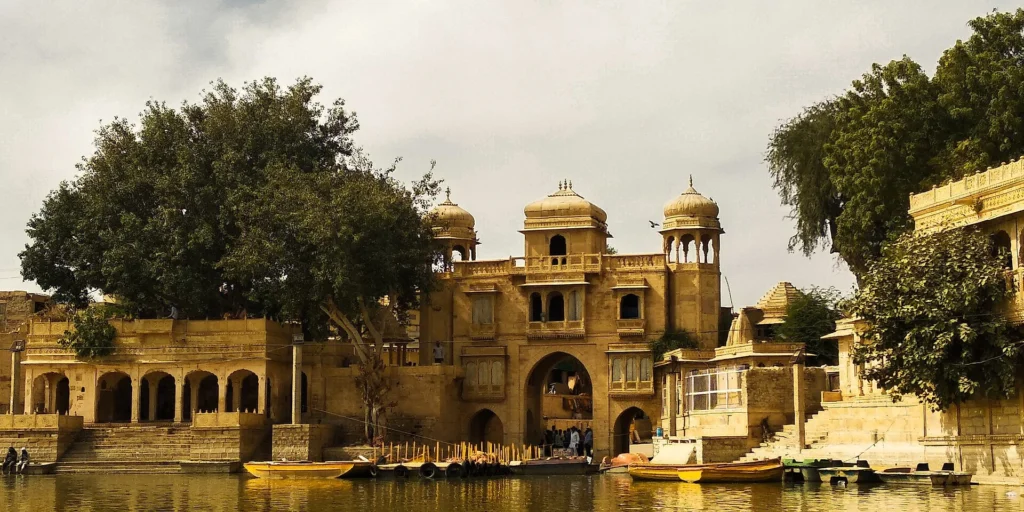
Maharwal Gadi Singh built Gadisar Lake in the 14th century as the primary water reservoir sustaining the desert city. Furthermore, the lake today reflects surrounding temples, cenotaphs, and the distinctive Tilon ki Pol gateway in its surface.
About Gadisar Lake
Most notably, the sunrise and sunset reflection views here rank among the finest in all of Rajasthan – specifically because the Tilon ki Pol ornamental gateway frames the water perfectly. As a result, photographers arrive at sunrise to capture the mirror reflection of the gateway and the fort silhouette before ripples from wind and boats disturb the surface.
Furthermore, the Tilon ki Pol gateway has a curious history – local tradition holds that a celebrated courtesan financed its construction, prompting the king to initially order its demolition before relenting due to its beauty.
Practical Information
- Entry: Free lakeside access, boating approximately INR 50 to 100 per person
- Timings: Sunrise to 9 PM daily
Most notably, the sunrise boat ride at Gadisar Lake provides the most romantically atmospheric of all things to do in Jaisalmer for couples. As a result, this is the one Jaisalmer experience we recommend scheduling specifically rather than fitting in when convenient.
5. Bada Bagh: The Royal Cenotaph Garden at Sunset
The Bhati rulers of Jaisalmer created Bada Bagh as a royal memorial complex where successive kings built cenotaphs honoring their predecessors. Furthermore, the site contains cenotaphs spanning from the 16th century onward.
About Bada Bagh
Most notably, the setting – cenotaphs silhouetted against the sand dunes with the setting sun directly behind – creates one of the most photographed compositions in Rajasthan travel photography. As a result, Bada Bagh specifically rewards the late afternoon visit timed for the golden hour cenotaph silhouette.
Furthermore, the cenotaph design at Bada Bagh evolved across centuries – comparing the different architectural periods across the memorial garden provides a genuinely interesting timeline of Rajput funerary tradition.
Practical Information
- Entry: INR 50 adults, INR 25 children
- Distance: 6 km from Jaisalmer city center
- Timings: 8 AM to 7 PM daily
Furthermore, combining Bada Bagh at sunset with a Sam Sand Dunes return route creates the finest Jaisalmer afternoon-to-evening itinerary available. Most notably, the golden cenotaph light arrives between 5:30 PM and 6:30 PM depending on the month.
6. Jaisalmer War Museum: India’s Border Military Heritage
The Indian Army established the Jaisalmer War Museum at the site of the 1971 Longewala Battle. Furthermore, this battle – where a small Indian force repelled a Pakistani armored column – inspired the celebrated Bollywood film Border.
About Jaisalmer War Museum
Most notably, the museum displays tanks, aircraft, artillery, and weapons captured from Pakistani forces during the 1971 war in their original configuration. As a result, the Jaisalmer War Museum provides the most genuinely moving and historically significant cultural experience among all Jaisalmer tourist places for travelers interested in India’s military history.
Furthermore, active Indian Army personnel staff sections of the museum – as a result, visitors receive firsthand commentary that no hired guide can replicate. Most notably, the Longewala Border Post visit organized from the museum provides access to the actual battle terrain.
Practical Information
- Entry: Free for Indian citizens
- Timings: 9 AM to 6 PM daily
- Location: 10 km from city center on the Jaisalmer-Jodhpur highway
7. Kuldhara: The Ghost Village of the Thar Desert
The Paliwal Brahmin community abandoned Kuldhara overnight in 1825 – leaving the entire village deserted simultaneously. Furthermore, local tradition holds that the community vanished leaving a curse that prevented any subsequent resettlement.
About Kuldhara
The Archaeological Survey of India now maintains Kuldhara as a heritage site. Furthermore, the crumbling sandstone houses preserve exactly the street layout and architectural vocabulary of early 19th-century desert village life in a state of genuine abandonment rather than managed reconstruction.
Most notably, the ghost village atmosphere at late afternoon sunset is the most atmospheric experience among all hidden attractions in Jaisalmer. As a result, Kuldhara specifically suits the 4 PM to 6 PM visiting window when the low light creates long shadows through the empty doorways.
Practical Information
- Entry: INR 10 adults, open 8 AM to 6 PM
- Distance: 18 km from Jaisalmer, approximately 25 minutes by road
Furthermore, jeep safaris from Sam Sand Dunes include Kuldhara as a standard stop. Most notably, combining the ghost village with the desert dunes creates the strongest single-day contrast itinerary available in Jaisalmer.
8. Nathmal ki Haveli: The Mirrored Mansion
Two brothers – Hathi and Lulu – simultaneously carved Nathmal ki Haveli from opposite sides of the building without coordinating their detailed design work. Furthermore, the result is a perfectly mirrored facade with subtle differences on each half that reward close side-by-side comparison.
About Nathmal ki Haveli
Most notably, the carved stone elephants on the facade are the largest elephant carvings on any Jaisalmer haveli. As a result, the Nathmal ki Haveli elephant detail has become the most reproduced single architectural motif in Jaisalmer heritage photography.
Furthermore, the haveli was originally the residence of the Prime Minister of Jaisalmer – as a result, the scale and quality of craftsmanship reflects the highest status available to a non-royal resident of the city.
- Entry: INR 20, timings 9 AM to 6 PM daily
9. Salim Singh ki Haveli: The Peacock Mansion
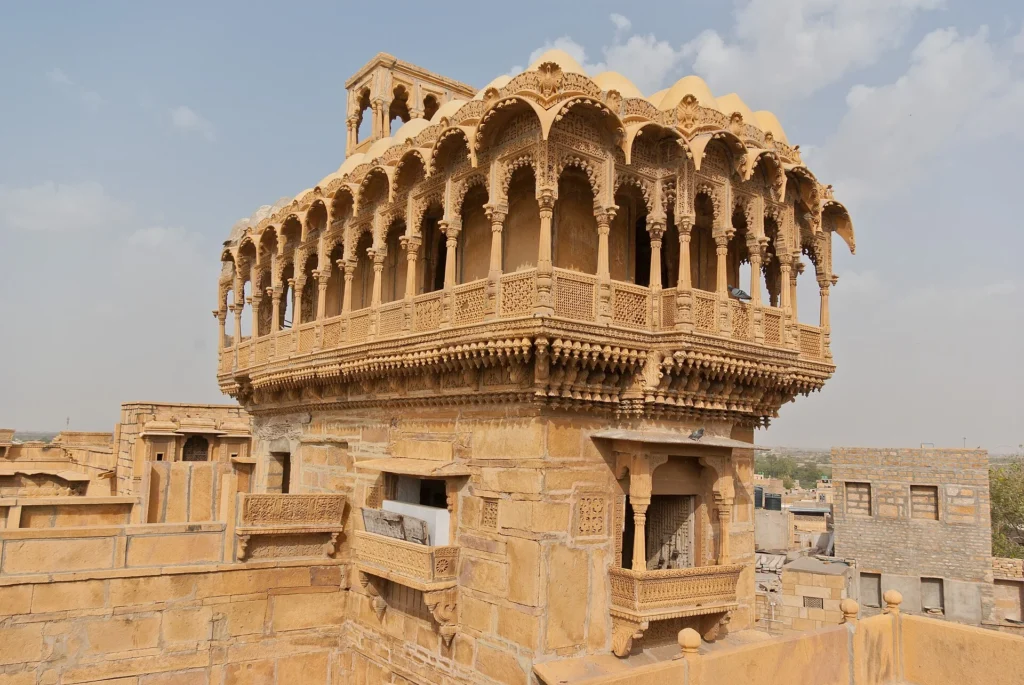
Diwan Salim Singh built this distinctive blue-topped mansion in the 17th century. Furthermore, the peacock-shaped top floor creates a silhouette visible from across the old city – most notably, this rooftop design has no equivalent in any other Rajasthani haveli.
As a result, Salim Singh ki Haveli provides the most visually dramatic exterior of any single Jaisalmer haveli when viewed from the street below. Furthermore, completing all three major havelis – Patwon ki, Nathmal ki, and Salim Singh ki – in a single morning covers the full architectural vocabulary of Jaisalmer merchant culture across 200 years of construction.
- Entry: INR 20, timings 9 AM to 6 PM daily
10. Desert National Park: Wildlife in the Thar
The Desert National Park covers 3,162 sq km of Thar Desert terrain 45 km from Jaisalmer. Furthermore, it shelters the Great Indian Bustard – one of the world’s most critically endangered bird species with fewer than 150 individuals remaining.
About Desert National Park
Most notably, the park also houses chinkaras, desert foxes, monitor lizards, and numerous raptor species including eagles, falcons, and desert owls. As a result, Desert National Park suits wildlife and birdwatching travelers who want a genuinely wild desert ecology experience beyond the standard tourist circuit.
Furthermore, the Great Indian Bustard sighting requires genuine patience and an early morning start – most notably, the park authority assigns nature guides who significantly improve bustard sighting probability.
Practical Information
- Entry: INR 100 Indians, park authority permission required
- Season: October to March is the only period the park operates tourist vehicles
- Best time: 6 AM to 9 AM for maximum wildlife activity
11. Akal Wood Fossil Park: Jurassic Jaisalmer
Paleontologists discovered 180-million-year-old petrified wood fossils at Akal village 17 km from Jaisalmer. Furthermore, the park displays 25 wood stumps in their original excavation positions within the desert landscape.
Most notably, this is one of the rarest Jurassic-period fossil sites accessible to tourists anywhere in India – as a result, geology and natural history enthusiasts specifically target the Akal park as a unique scientific heritage experience.
Furthermore, the site’s visual drama – ancient fossil wood rising from the same desert where camels pass today – creates a genuinely striking encounter with deep geological time.
- Entry: INR 5, open 8 AM to 6 PM daily
- Distance: 17 km from Jaisalmer city
12. Tanot Mata Temple: Jaisalmer’s Border Pilgrimage
The Border Security Force maintains the Tanot Mata Temple 177 km west of Jaisalmer near the Pakistan border. Furthermore, the temple houses unexploded Pakistani shells from the 1971 war displayed in a dedicated room – the shells failed to detonate in what devotees attribute to the goddess’s protection.
Most notably, the combination of the remote border landscape drive, the military-maintained temple, and the 1971 war display creates the most extraordinary road trip among all places to visit in Jaisalmer for adventurous travelers.
Furthermore, the drive through the Indian border desert passes genuine camel herders, sparse military checkpoints, and landscape that tourism has barely touched.
- Entry: Free, open 6 AM to 8 PM
- ID: Carry valid government photo ID throughout the border drive
13. Jain Temples Inside Jaisalmer Fort: Ancient Stone Devotion
Jain devotees commissioned seven interconnected temples inside the fort complex between the 12th and 15th centuries. Furthermore, these temples collectively contain over 600 individual stone deity carvings of extraordinary intricacy.
Most notably, the temples are still actively used for daily worship – as a result, visiting before 9 AM when the morning puja occurs provides a living religious experience alongside the architectural heritage. Furthermore, the dilwara-inspired carved marble screens inside the temples rival the famous Ranakpur and Dilwara temples in technical quality despite being far less visited.
- Entry: Included in Jaisalmer Fort ticket, open 8 AM to 12 PM
- Dress code: Remove shoes, dress modestly, cover shoulders and legs
14. Longewala Battle Site: Where the 1971 Victory Happened
The Indian Army fought one of the most tactically significant battles of the 1971 Indo-Pakistan War at Longewala. Furthermore, a single company of 120 soldiers held a Pakistani armored column of 2,000 troops through the night until IAF air support arrived at dawn.
Most notably, Pakistani tanks remain on the battle site as memorials – as a result, standing next to actual battlefield hardware on the actual ground where the battle occurred provides a historical immediacy that no museum exhibit replicates.
Furthermore, the Jaisalmer War Museum organizes visits to the Longewala site as part of extended border tour packages. Most notably, the drive through the border desert to reach Longewala is itself worth the journey.
- Distance: 100 km from Jaisalmer city
- Entry: Free, military area – valid ID required
15. Jaisalmer Desert Festival: February’s Cultural Peak
The Rajasthan Tourism Development Corporation organizes the Jaisalmer Desert Festival every February. Furthermore, the festival draws musicians, dancers, camel decorators, and folk performers from across the Thar Desert communities.
About the Desert Festival
Most notably, the festival events include camel races, turban-tying competitions, gair dance performances, and the famous Mr. Desert competition. As a result, the February festival provides the most concentrated single-week exposure to Rajasthani desert cultural identity available at any Jaisalmer visit timing.
Furthermore, the festival evening performances at Sam Sand Dunes – folk music performed under open desert sky – create an atmosphere that regular season visits cannot replicate.
- Timing: 3 days in February, dates shift annually with lunar calendar
- Booking: Book accommodation 3 to 4 months ahead – city fills completely
Things to Do in Jaisalmer: Activity Guide by Traveler Type
Things to Do in Jaisalmer for Adventure Seekers
Sam Sand Dunes jeep safari covering border terrain and Kuldhara ghost village suits the highest-adrenaline day available from Jaisalmer. Furthermore, parasailing over the dunes – conducted between 7 AM and 9 AM – produces the clearest desert panoramas of any activity timing.
Quad biking at Sam requires no prior experience for the beginner track. Most notably, overnight desert camping under clear Thar skies provides the finest stargazing available anywhere in North India – as a result, adventure travelers consistently rate the overnight camp experience as the strongest single Jaisalmer memory.
Things to Do in Jaisalmer for Culture and Heritage Lovers
The full fort circuit covers the Raj Mahal, Jain temples, and merchant quarter in one focused morning. Furthermore, the differences in architectural periods between the three havelis – Patwon ki, Nathmal ki, and Salim Singh ki – provide a genuine timeline of desert merchant prosperity across 200 years.
Most notably, the evening sound and light show at Jaisalmer Fort runs during peak tourist season from October to February. As a result, heritage travelers can extend the fort experience into the evening hours with professional audiovisual narration of the city’s history.
Things to Do in Jaisalmer for Couples
Gadisar Lake sunrise boat ride provides the most romantically atmospheric early morning experience available anywhere in Jaisalmer. Furthermore, Bada Bagh cenotaph sunset photography creates the most memorable shared golden hour of any Rajasthan destination.
Most notably, an overnight desert camp with private tent options provides silence, stars, and a natural environment that creates the strongest shared travel memory of any Jaisalmer experience. As a result, couples consistently rate the desert night camp higher than any specific monument visit when reflecting on their Jaisalmer trip.
Jaisalmer Best Time to Visit: Honest Seasonal Guide
| Season | Months | Experience | Honest Assessment |
| Winter | Oct to Feb | Best overall | Cool weather, all activities operational, peak prices |
| Summer | Mar to Jun | Very hot | Avoid outdoor activities after 10 AM |
| Monsoon | Jul to Sep | Quiet, rare rain | Lower prices, fort photography excellent |
| Desert Festival | February | Cultural peak | Book accommodation 3 to 4 months ahead |
Why October to February Is the Best Time to Visit Jaisalmer
October to February delivers temperatures between 5 and 25 degrees Celsius throughout the Jaisalmer region. Furthermore, all outdoor activities including desert safaris, camel rides, and Bada Bagh visits operate at full capacity.
Most notably, the Jaisalmer Desert Festival in February attracts musicians, dancers, and camel decorators from across Rajasthan. As a result, February visitors experience Jaisalmer’s cultural identity at its most concentrated and theatrical.
The Honest Case for Monsoon Visits
July to September brings occasional rain to the Thar Desert. Furthermore, the golden sandstone fort glistens after rain in photographic conditions that no winter visit produces – most notably, this creates a genuinely different visual atmosphere that photographers specifically target.
Most notably, accommodation prices drop 40 to 60 percent during monsoon. As a result, budget travelers who can accept occasional rain consistently rate monsoon Jaisalmer as exceptional value. That said, desert safaris close during heavy rain periods – plan flexible itineraries for monsoon visits.
Planning a Gujarat and Rajasthan combined trip? Read our guide on best road trips from Ahmedabad to plan your complete western India itinerary.
Places to Visit in Jaisalmer in 3 Days: Complete Itinerary
The places to visit in Jaisalmer in 3 days cover the full heritage, desert, and adventure circuit in a logical geographic sequence. Furthermore, this 3-day structure minimizes backtracking and maximizes the quality of each experience.
Day 1 – The Fort and City Heritage Circuit
- 7 AM: Gadisar Lake sunrise boat ride and Tilon ki Pol photography
- 9 AM: Jaisalmer Fort entrance – Raj Mahal museum, Jain temples, merchant quarter
- 1 PM: Lunch at a rooftop fort restaurant overlooking the golden city
- 3 PM: Patwon ki Haveli, Nathmal ki Haveli, Salim Singh ki Haveli circuit
- 6 PM: Sunset at Bada Bagh cenotaph complex
- Evening: Old city market walk for Rajasthani textiles, silver jewelry, and local sweets
Furthermore, Day 1 covers the full fort and haveli heritage circuit without requiring any vehicle between stops. Most notably, all Day 1 attractions sit within comfortable walking distance of the fort entrance.
Day 2 – Desert Safari and Dunes
- 7 AM: Early jeep safari departure toward Sam Sand Dunes – furthermore, morning light produces the finest shadow and texture photography on the dune faces
- 10 AM: Kuldhara ghost village detour on the return route
- 12 PM: Return to Jaisalmer for lunch
- 2 PM: Jaisalmer War Museum – allow 90 minutes for the full military heritage circuit
- 5 PM: Desert National Park bird-watching session (October to March)
- Evening: Overnight desert camp at Sam if booked
Most notably, Day 2’s overnight camp option transforms the evening into the most atmospheric of the entire 3-day trip. As a result, travelers who book the overnight camp on Day 2 consistently describe it as the strongest single Jaisalmer memory.
Day 3 – Border Drive and Hidden Heritage
- 7 AM: Early departure for Tanot Mata Temple border drive (177 km, approximately 3 hours each way)
- En route: Longewala Battle site and war memorial stop
- Afternoon: Return through Akal Wood Fossil Park for the Jurassic fossil site visit
- Evening: Final sunset photography from the Jaisalmer Fort outer walls
Furthermore, Day 3’s border drive represents the most genuinely adventurous of all places to visit in Jaisalmer in 3 days options. Most notably, the military landscape, ancient temple, border proximity, and geological fossil site collectively create a day that no standard tour package includes.
Quick Reference: Entry Fees and Timings for All 15 Attractions
| # | Attraction | Distance | Entry Indians | Timings | Best Visit |
| 1 | Jaisalmer Fort | City center | INR 70 | 9 AM to 6 PM | 7 AM sunrise |
| 2 | Sam Sand Dunes | 45 km | Activity-based | All day | Sunrise, sunset |
| 3 | Patwon ki Haveli | City center | INR 50 | 9 AM to 6 PM | Morning |
| 4 | Gadisar Lake | 1 km | Free plus boat | Sunrise to 9 PM | Sunrise |
| 5 | Bada Bagh | 6 km | INR 50 | 8 AM to 7 PM | Sunset |
| 6 | Jaisalmer War Museum | 10 km | Free | 9 AM to 6 PM | Morning |
| 7 | Kuldhara Ghost Village | 18 km | INR 10 | 8 AM to 6 PM | Late afternoon |
| 8 | Nathmal ki Haveli | City center | INR 20 | 9 AM to 6 PM | Morning |
| 9 | Salim Singh ki Haveli | City center | INR 20 | 9 AM to 6 PM | Morning |
| 10 | Desert National Park | 45 km | INR 100 | Oct to Mar | 6 AM to 9 AM |
| 11 | Akal Wood Fossil Park | 17 km | INR 5 | 8 AM to 6 PM | Any time |
| 12 | Tanot Mata Temple | 177 km | Free | 6 AM to 8 PM | Full day drive |
| 13 | Jain Temples Inside Fort | Inside fort | Fort ticket | 8 AM to 12 PM | Early morning |
| 14 | Desert Festival | Sam area | Event ticket | February only | February |
| 15 | Longewala Battle Site | 100 km | Free | Daylight hours | Day 3 drive |
Jaisalmer Tourist Places by Traveler Type
| Traveler Type | Top Picks | Key Tip |
| Pilgrims | Jain Temples, Tanot Mata Temple | Visit Jain temples before 12 PM |
| History lovers | Jaisalmer Fort, War Museum, Kuldhara | Budget 3 to 4 hours for fort |
| Adventure seekers | Sam Dunes, jeep safari, overnight camp | Book October to February |
| Couples | Gadisar Lake sunrise, Bada Bagh sunset, desert camp | Weekday visits for privacy |
| Families | Fort palace museum, Bada Bagh, War Museum | Start fort visit by 9 AM |
| Photographers | Gadisar sunrise, Bada Bagh sunset, fort walls | Golden hour strictly |
How to Reach Jaisalmer
By Train
Jaisalmer Railway Station connects to Jodhpur in 5 hours, Jaipur in 10 hours, and Delhi in 18 hours. Furthermore, the Jaisalmer Express from Delhi runs three days weekly.
Most notably, booking train tickets 60 to 90 days ahead is essential for October to February travel. As a result, last-minute train availability to Jaisalmer during peak season is essentially zero – early booking is not optional.
By Road
Jodhpur sits 295 km from Jaisalmer via NH68. Furthermore, private taxis cover the route in approximately 4.5 hours – most notably, the Jodhpur to Jaisalmer drive passes through genuinely dramatic desert landscape that makes the journey itself worthwhile.
Jaipur sits 575 km from Jaisalmer via NH11. Furthermore, overnight buses from Jaipur operate daily and suit budget travelers who want to maximize daylight time in Jaisalmer.
Combining Jaisalmer with Gujarat? Read our guide on places to visit near Ahmedabad to plan the Gujarat leg of your western India itinerary.
By Air
Jaisalmer Airport now receives commercial flights from Delhi and other cities on select days. Furthermore, IndiGo and Air India operate direct routes – most notably, flight availability remains limited and checking schedules at least 60 days ahead is essential for air travel planning.
Practical Tips Before Your Jaisalmer Visit
What to Carry
Sunscreen SPF 50 plus is non-negotiable for Jaisalmer. Furthermore, the Thar Desert UV index regularly exceeds 12 between March and September.
Cotton and light linen clothing suits daytime desert conditions. Most notably, temperatures drop sharply after sunset in winter – carrying a jacket or shawl is essential even in October and November when days feel warm.
Honest Visitor Notes
Book desert safari operators at least 2 weeks in advance. Furthermore, same-day bookings during peak season often find the best camps fully sold – the quality difference between advance-booked premium camps and last-minute alternatives is significant.
The Jaisalmer Fort is a living community. Most notably, residents consistently request that visitors walk quietly through residential sections and respect private areas marked without signage. That said, the fort architecture genuinely rewards slow exploration – as a result, budget 3 to 4 hours rather than the standard 90-minute rush that most visitors allocate.
Furthermore, carry cash throughout your Jaisalmer visit. Most notably, the haveli entry counters, village attractions, and many fort-based vendors do not accept digital payments reliably.
Planning your Jaisalmer stay? Read how to reserve your hotel with zero prepayment before your trip for maximum booking flexibility.
Conclusion
The places to visit in Jaisalmer reward travelers who allow the city more than a single rushed afternoon. Furthermore, the fort at sunrise, the dune sunset, the ghost village at twilight, and the border temple drive collectively create a travel experience unavailable anywhere else in India.
Most notably, 3 days covers the essential circuit – from the golden fort to the Thar Desert’s edge. As a result, Jaisalmer suits both the budget traveler who sleeps in the fort and the luxury traveler who camps in a private desert tent under stars bright enough to read by.
Above all, the golden sandstone city earns one more morning than you originally planned. Most notably, that extra morning – watching the fort walls turn amber in the 6 AM light before the city wakes – will be the one you remember longest.