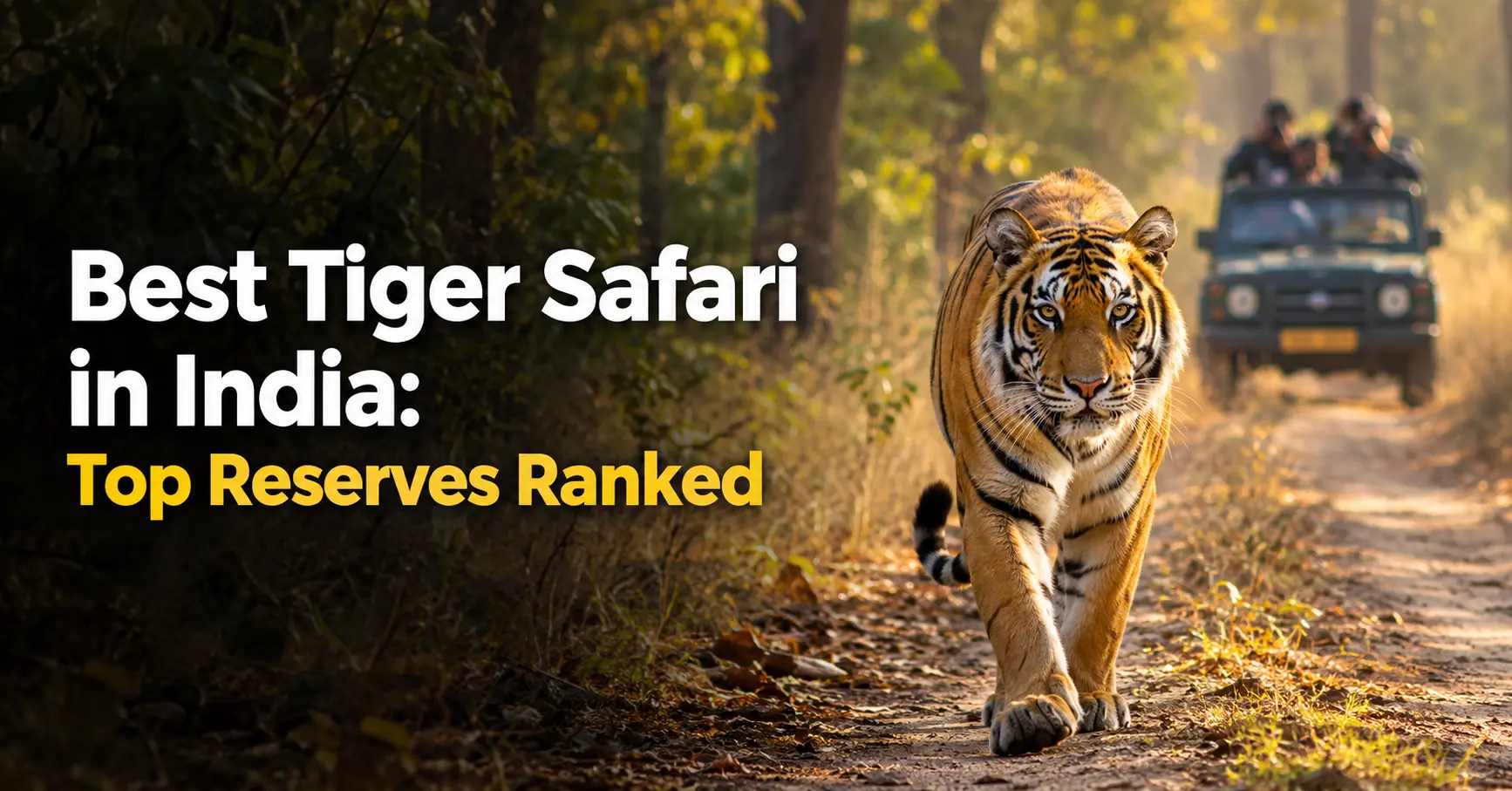
India protects over 4,000 tigers across its reserve network, holding more than 70 percent of the world’s wild tiger population. Furthermore, the best tiger safari in India experience depends entirely on choosing the right park.
Most notably, sighting odds, permit availability, and travel season all shape the outcome. This guide ranks the top reserves honestly, with real sighting data and booking timelines.
What You Will Learn
- Best tiger safari in India, ranked by sighting probability
- Best place to see tigers in India across every region
- Best tiger reserve in India for first-time and repeat visitors
- Famous jungle safari in India options beyond tigers alone
- Permits, costs, and honest booking timelines
Best Tiger Reserve in India: Bandhavgarh National Park
Bandhavgarh delivers some of the highest tiger sighting probabilities per drive anywhere in India. Furthermore, this reputation has held steady across multiple seasons and countless traveler reviews.
Ancient fort ruins and dense teak forests create a genuinely striking backdrop for every safari. The crumbling stonework peeks through the canopy at unexpected moments during each drive.
Most notably, many wildlife experts call this the single best tiger reserve in India for guaranteed-feeling odds. As a result, first-time visitors with limited time often choose Bandhavgarh above every other option.
Guides here know individual tigers by name and territory, tracking their movements with genuine familiarity. This local expertise meaningfully improves the odds of a memorable sighting during your visit.
Ranthambore: India’s Most Famous Jungle Safari
Locals call Ranthambore the Land of the Tigers, sitting within Rajasthan’s Golden Triangle tourism circuit. Furthermore, this positioning makes it remarkably convenient for travelers combining wildlife with Delhi and Agra.
Most notably, this reserve blends historic architecture with genuinely accessible wildlife viewing near Delhi and Jaipur. A crumbling tenth-century fort rises dramatically above the lakes where tigers often rest.
As a result, Ranthambore remains many travelers’ first choice for a famous jungle safari in India. The park’s ten zones each offer distinct terrain, from open grassland to dense forest cover.
Most notably, zones 1 through 5 near the fort consistently produce the highest sighting rates. Travelers should specifically request these zones when booking, since allocation happens somewhat randomly otherwise.
Jim Corbett: The Best Place to See Tigers in North India
Corbett shelters leopards, elephants, and over 600 bird species alongside its notable tiger population. Furthermore, this biodiversity makes every safari rewarding even on days without a tiger sighting.
Most notably, this reserve serves as a critical source, dispersing tigers to neighboring protected areas nearby. Corbett’s healthy population effectively repopulates surrounding reserves across the wider Terai landscape.
Jim Corbett stands out as the destination offering forest rest houses deep within prime tiger habitat. Sleeping inside the reserve itself creates an experience unmatched by any external hotel stay.
Additionally, the Dhikala zone’s grasslands and river systems attract elephants and deer in visible numbers. This concentration of prey species naturally draws tigers toward the same open areas regularly.
Planning your Corbett trip? Read our complete guide to Jim Corbett National Park for zones, permits, and booking details.
Kanha Tiger Reserve: A Top Central India Safari
Kanha’s sal forests inspired Rudyard Kipling’s Jungle Book, adding genuine literary charm to every visit. Furthermore, the landscape still resembles the wilderness Kipling described over a century ago.
Most notably, this reserve offers both jeep and elephant safaris for varied wildlife-viewing preferences. Elephant-back safaris move quietly through terrain jeeps genuinely cannot access, improving close-range sighting chances.
Kanha also protects the rare hard-ground barasingha, a swamp deer found nowhere else on earth. As a result, this reserve rewards visitors with biodiversity well beyond its famous tiger population.
Tadoba: A Quieter Best Tiger Safari in India Option
Tadoba remains less crowded than Ranthambore or Bandhavgarh despite its recent surge in popularity. Furthermore, this relative quiet gives visitors more space to genuinely absorb the surroundings.
As a result, visitors experience animals up close without the distraction of large tourist crowds. Fewer vehicles per sighting means calmer animals and more natural, unhurried behavior on display.
Most notably, this makes Tadoba a genuinely strong pick for repeat safari travelers seeking a different pace. Several conscious luxury lodges near Kolara Gate now cater specifically to this growing demand.
Pench, Kabini and Satpura: Emerging Tiger Reserves
Satpura covers 2,200 sq km, the largest tiger reserve in central India, with a UNESCO nomination pending. Furthermore, seven of central India’s highest peaks rise within its boundaries.
Most notably, rocky terrain and grassland patches here create favorable conditions for tiger sightings. Both day and night safaris remain available, a rare option among India’s major reserves.
Kabini, also called Kabini Forest Reserve, ranks among Karnataka’s most popular wildlife safari destinations. Boat-based safaris here add a genuinely different perspective compared to standard jeep drives elsewhere.
Pench, straddling Maharashtra and Madhya Pradesh, rounds out this trio with dense teak forests and reliable leopard sightings. Together, these three reserves offer excellent alternatives to India’s more famous parks.
Tiger Reserve Comparison Table
| Reserve | State | Sighting Probability | Best For |
| Bandhavgarh | Madhya Pradesh | Very High | First-time visitors wanting reliable sightings |
| Ranthambore | Rajasthan | High | Golden Triangle travelers, accessibility |
| Jim Corbett | Uttarakhand | High | Diverse wildlife, forest rest house stays |
| Kanha | Madhya Pradesh | Moderate to High | Elephant safaris, Jungle Book scenery |
| Tadoba | Maharashtra | Moderate to High | Fewer crowds, repeat visitors |
| Satpura | Madhya Pradesh | Moderate | Quiet, landscape-focused safaris |
| Kabini | Karnataka | Moderate | South India wildlife travelers |
Jeep, Canter or Elephant: Choosing Your Safari Format
Operators use shared canters for budget-friendly group safaris, ideal for travelers watching costs closely. Furthermore, canters suit larger groups and families traveling together on a single vehicle.
Most notably, a private jeep costs more per person but offers a personalized, flexible safari experience. Jeeps also allow faster repositioning when guides receive word of nearby tiger activity.
Elephant safaris remain available at select parks like Kanha, Bandhavgarh, and Corbett for closer wildlife views. This format suits travelers hoping to access denser terrain unreachable by any wheeled vehicle.
As a result, choosing between these three formats depends on your budget, group size, and comfort level. No single option guarantees a better sighting, though jeeps offer the most flexibility overall.
Permits, Costs and Booking Timelines for Tiger Safari in India
Forest departments require permits for every core zone entry, and popular slots fill months in advance. Furthermore, Bandhavgarh and Ranthambore consistently sell out fastest among all major reserves.
Most notably, a last-minute booking almost always means a buffer zone slot with lower sighting chances. As a result, planning your safari at least three to four months ahead genuinely matters.
Costs vary significantly by park, accommodation tier, and vehicle choice, so requesting a custom quote helps. Popular parks carry higher entry and permit fees than quieter reserves like Pench or Panna.
Accommodation tends to be the biggest swing factor between a basic and a premium safari trip. A rustic forest rest house costs dramatically less than a luxury wildlife lodge nearby.
Best Time for a Tiger Safari in India
Go for the morning safari if you want the highest wildlife activity and cooler temperatures. Furthermore, tigers move more actively during these cooler hours before the day’s heat sets in.
Most notably, pick the evening safari for exceptional sunset photography and a more relaxed start to your day. This slot suits travelers who prefer not to wake before dawn.
March through June delivers the strongest sighting odds, as dry conditions push tigers toward water sources. As a result, this window consistently produces the highest sighting rates across nearly every reserve.
That said, most parks close during the monsoon months from July through September for conservation reasons. Planning around this closure window remains essential when booking any Indian tiger safari.
Where to Stay Near India’s Top Tiger Reserves
Forest rest houses inside or near core zones offer genuine proximity to prime tiger habitat. Furthermore, these properties let guests hear the forest wake up before the first safari begins.
Most notably, luxury lodges near Tadoba, Ranthambore, and Bandhavgarh combine comfort with easy safari access. Many now feature restored architecture, private pools, and dedicated naturalist guides on staff.
Budget travelers can find comfortable mid-range hotels just outside most park gates at lower cost. This option suits travelers prioritizing value over the premium experience of an in-park stay.
Planning your safari stay? Read how to reserve your accommodation with zero prepayment for maximum flexibility.
Conclusion: Planning the Best Tiger Safari in India
The best tiger safari in India comes down to matching your priorities with the right reserve. Furthermore, Bandhavgarh leads on sighting odds, while Corbett offers the widest wildlife diversity overall.
Book your permits early. Choose your safari format based on budget and comfort.
Frequently Asked Questions
What is the best tiger safari in India?
What is the best place to see tigers in India?
What is the best tiger reserve in India overall?
How many tiger reserves does India have?
Is a tiger sighting guaranteed on safari?
What is a famous jungle safari in India beyond tigers?
How far in advance should I book safari permits?
What is the best time of year for a tiger safari?
Should I choose a jeep or canter safari?
Which tiger reserve suits first-time visitors best?