
PM Narendra Modi inaugurated the Ram Mandir on January 22, 2024. Furthermore, that single event transformed Ayodhya from an important pilgrimage city into the most visited spiritual destination in India.
Most notably, the places to visit in ayodhya now span the world’s finest new Hindu temple, ancient ghats where priests perform nightly Aarti, Ramayana-age sacred sites, and a completely modernized riverfront. As a result, 2026 Ayodhya delivers a pilgrimage and travel experience unavailable at any previous point in the city’s recorded history.
This guide covers all 15 honestly – with timings, entry fees, visitor tips, seasonal advice, and the best nearby destinations to extend your trip.
What You Will Learn
- The 15 best places to visit in Ayodhya including Ram Mandir and all major temples
- Honest entry fees, timings, and practical visitor details for every ayodhya attraction
- Ayodhya best time to visit – seasonal guide and festival calendar
- Places to visit near Ayodhya within 50 km and 200 km
- Tourist attractions in Ayodhya by traveler type: pilgrims, families, couples, history lovers
- Ready-to-use 2-day and 3-day Ayodhya itineraries
Why Ayodhya 2026 Is Different From Any Previous Visit
The Uttar Pradesh government completed Ram Path – a wide ceremonial boulevard connecting Maharishi Valmiki International Airport directly to Ram Mandir. Furthermore, the airport itself now receives direct flights from Delhi, Mumbai, Chennai, and Ahmedabad.
Most notably, new ghat infrastructure, improved crowd management systems, and cleaner Sarayu riverbanks define the 2026 visitor experience. As a result, first-time and returning visitors both find a comprehensively transformed city that functions as a genuinely world-class pilgrimage destination.
Furthermore, the city added Durlabh Darshan Kendra, Lata Mangeshkar Chowk, a renovated Ram Katha Park, and upgraded security infrastructure around Ram Mandir since 2024. In particular, these additions ensure that the ayodhya tourist places experience now extends far beyond a single temple visit into a full multi-day itinerary.
1. Ram Janmabhoomi and Ram Mandir: The Heart of Ayodhya
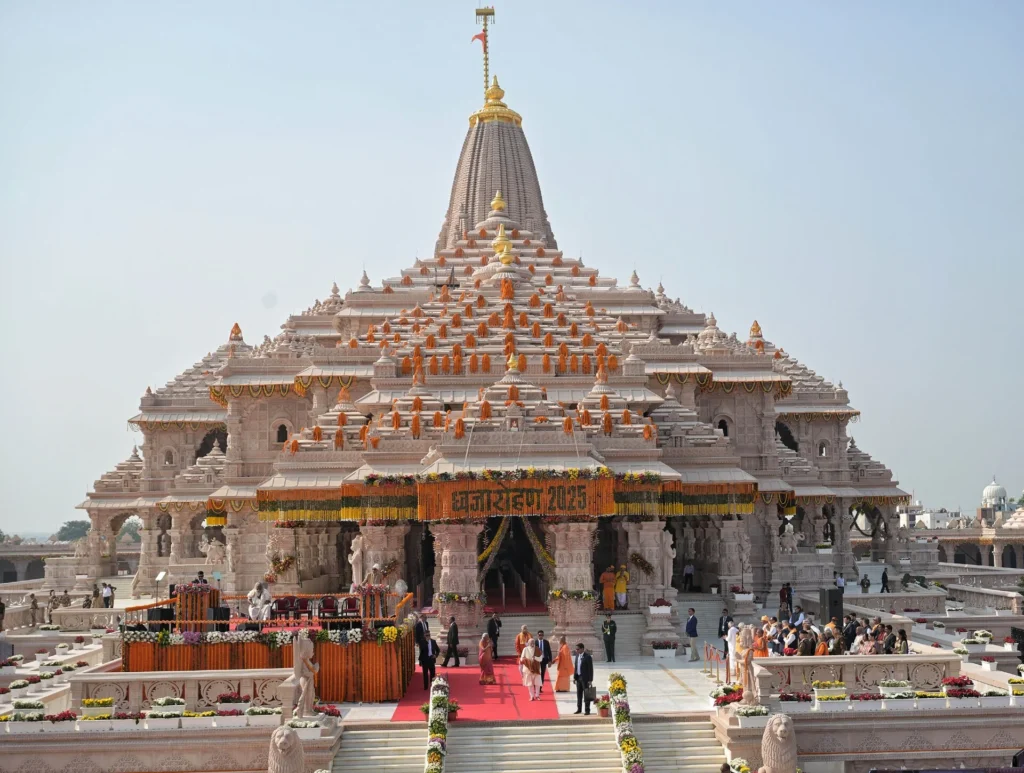
Ram Mandir is the most significant of all places to visit in ayodhya. Furthermore, Hinduism identifies Ayodhya as the birthplace of Lord Ram – and Ram Janmabhoomi marks the exact sacred location of that divine birth.
About Ram Mandir
The Shri Ram Janmabhoomi Teerth Kshetra Trust built the new temple in the Nagara architectural style using pink Bansi Paharpur sandstone. Furthermore, the main temple structure spans 380 feet in length, 250 feet in width, and 161 feet in height.
Most notably, the temple complex covers 70 acres and includes 44 smaller temples within the premises. As a result, the Ram Mandir complex functions simultaneously as a spiritual site, an architectural landmark, and a cultural monument of global significance.
Architecture and Design Highlights
The temple uses the five-shrine Panchaayatan Nagara design. Furthermore, the main shikhar rises 161 feet above ground level – making it visible from across the Ayodhya skyline.
Sculptor artists carved over 100,000 ornamental details across the temple exterior. Most notably, the inner sanctum houses Ram Lalla – the child form of Lord Ram – in the regal posture specific to the Treta Yuga iconographic tradition. Furthermore, the entire complex uses locally sourced stone materials that align the monument with the architectural conventions of ancient North Indian sacred architecture.
Visiting Ram Mandir in 2026
Pilgrims enter after a security check and mandatory bag deposit. Furthermore, no bags, phones, or leather items are permitted inside the inner sanctum.
- Summer timings: 4 AM to 11 AM and 2 PM to 9 PM
- Winter timings: 5 AM to 11 AM and 2 PM to 9 PM
- Entry: Free for all visitors
Most notably, weekend and festival crowds can reach several lakh visitors simultaneously. As a result, weekday visits between 6 AM and 8 AM provide the most peaceful darshan experience. Furthermore, a cloak room near the entrance securely stores deposited items during the full visit.
2. Hanuman Garhi: The Guardian Temple of Ayodhya
Hanuman Garhi stands atop a hilltop in the heart of Ayodhya. Furthermore, visitors climb 76 steps to reach the main temple entrance – and the hilltop provides panoramic views across the city’s skyline.
About Hanuman Garhi
Tradition holds that the Nawab of Awadh built this Hanuman temple in the 18th century. Furthermore, the temple houses a 6-inch idol of Lord Ram alongside the main Hanuman shrine.
Most notably, Hanuman Garhi serves both Hanuman devotees and Ram pilgrims simultaneously. As a result, the temple consistently ranks as the second most visited ayodhya attraction after Ram Mandir itself.
Practical Information
- Timings: 5 AM to 11 AM and 2 PM to 9 PM daily
- Entry: Free for all visitors
Furthermore, the hilltop provides one of the finest photography positions in Ayodhya. Most notably, visiting Hanuman Garhi immediately after Ram Mandir makes geographic sense since both temples sit within comfortable walking distance.
3. Kanak Bhawan: The House of Gold
Kanak Bhawan is one of the most visually distinctive ayodhya famous places. Furthermore, the temple sits 400 metres from Hanuman Garhi – making it a natural third stop on the main temple circuit.
About Kanak Bhawan
The name translates to “House of Gold.” Furthermore, tradition holds that Queen Kaikeyi gifted this golden house to Goddess Sita as a wedding present.
The temple houses gem-studded golden crown idols of Lord Ram and Goddess Sita. Most notably, the artistic craftsmanship of the idols – particularly the intricacy of the golden crowns – creates a visual impact that distinguishes Kanak Bhawan from every other Ram temple in Ayodhya.
As a result, Kanak Bhawan holds a distinctly intimate and personal significance among all ayodhya famous places for female pilgrims in particular.
Practical Information
- Timings: 8 AM to 12 PM and 4 PM to 9 PM daily
- Entry: Free for all visitors
Furthermore, a devotional music performance runs in the main hall during evening sessions. Most notably, this musical dimension draws large crowds between 6 PM and 8 PM – as a result, arriving at 4 PM provides the best combination of light, atmosphere, and manageable crowds.
4. Ram ki Paidi and the Sarayu Aarti
Ram ki Paidi is the main Sarayu River ghat complex in Ayodhya. Furthermore, priests perform the Sarayu Aarti here every evening at sunset in coordinated sequences that mirror the Ganga Aarti at Varanasi.
The Sarayu Aarti Experience
The 2026 Sarayu Aarti infrastructure includes new lighting systems, amplified sound, and wider ghat steps that accommodate thousands of simultaneous visitors. Furthermore, the Aarti runs with professional choreography involving multiple priests, synchronized lamps, and devotional chanting.
Most notably, the Sarayu Aarti experience in 2026 surpasses anything available at these ghats before the Ram Mandir inauguration. As a result, the Sarayu Aarti now ranks alongside Varanasi’s Ganga Aarti as one of the two finest river worship ceremonies in North India.
Practical Information
- Aarti timing: Daily at sunset, approximately 6:30 PM in winter and 7:15 PM in summer
- Entry: Free, ghats accessible from sunrise to 10 PM
- Tip: Arrive 30 minutes before Aarti time to secure a good viewing position on the ghat steps
Furthermore, the Sarayu river walk adjacent to the ghat connects to multiple nearby temples. Most notably, combining the Sarayu Aarti with an evening walk along Lata Mangeshkar Chowk creates the finest single evening itinerary in Ayodhya.
5. Nageshwarnath Temple: Ayodhya’s Ancient Shiva Shrine
Nageshwarnath Temple is one of the oldest surviving temples in Ayodhya. Furthermore, tradition holds that Kush – the younger son of Lord Ram – built it as a gesture of gratitude after a Naag Kanya devotee recovered his lost ornament from the Sarayu River.
What Makes Nageshwarnath Special
Hindus celebrate Mahashivratri at Nageshwarnath with a large procession that attracts thousands of Shiva devotees annually. Furthermore, the temple’s location on the Sarayu ghat circuit makes it a natural inclusion in any places to visit in ayodhya walking itinerary.
Most notably, the Nageshwarnath Temple is the only continuously operating temple in Ayodhya with documented pre-medieval historical records. As a result, heritage-focused travelers prioritize it alongside the more prominent Ram and Hanuman temples.
Practical Information
- Timings: 6 AM to 12 PM and 4 PM to 9 PM
- Entry: Free for all visitors
Furthermore, the temple priests perform an evening Aarti at approximately 7 PM. Most notably, this Aarti attracts a more intimate and contemplative crowd than the main Sarayu Aarti – as a result, it suits travelers seeking quiet devotional atmosphere.
6. Guptar Ghat: Where Lord Ram Took Jal Samadhi
Guptar Ghat sits on the Sarayu River in Faizabad, approximately 10 km from Ayodhya town. Furthermore, tradition holds that Lord Ram meditated at this ghat before taking Jal Samadhi – the sacred immersion through which he departed from his human form.
About Guptar Ghat
The ghat complex includes multiple small temples and peaceful river access. Furthermore, the Sarayu River at Guptar Ghat runs in a quieter stretch than the main city ghats – most notably, this creates a contemplative atmosphere that the busier Ram ki Paidi ghats cannot replicate.
As a result, Guptar Ghat is one of the most spiritually significant tourist attractions in ayodhya for pilgrims who want to complete the full sacred site circuit beyond the main temple triangle.
Practical Information
- Distance: 10 km from Ram Mandir, approximately 20 minutes by local taxi or auto-rickshaw
- Entry: Free, accessible daily from sunrise to 10 PM
That said, Guptar Ghat suits inclusion on Day 2 of any Ayodhya itinerary rather than Day 1. Furthermore, combining Guptar Ghat with Treta Ke Thakur creates the finest riverside morning circuit available outside the main city center.
7. Treta Ke Thakur: Ancient Ram Temple on Sarayu Bank
Treta Ke Thakur is one of Ayodhya’s most ancient Ram temples. Furthermore, tradition identifies this site as the location where Lord Ram performed the Ashwamedha Yagna – the horse sacrifice ceremony following his victorious return from Lanka.
About Treta Ke Thakur
Black stone idols of Lord Ram, Sita, Lakshman, Bharata, Shatrughan, and Hanuman sit inside the main shrine. Furthermore, the riverside setting of Treta Ke Thakur creates a more contemplative atmosphere than the busier city-center temples.
Most notably, pilgrims seeking a quieter darshan experience specifically seek out Treta Ke Thakur over the more crowded main circuit temples. As a result, this temple is consistently undervisited relative to its historical and spiritual significance.
Practical Information
- Timings: 7 AM to 12 PM and 4 PM to 9 PM
- Entry: Free for all visitors
8. Mani Parvat: The Sacred Mound with Panoramic Views
Mani Parvat is a hillock that Ramayana tradition identifies as the mound created from gems offered during Lord Ram’s coronation. Furthermore, a Buddhist stupa sits atop the hillock – most notably, this stupa confirms Ayodhya’s historical significance across multiple religious traditions simultaneously.
About Mani Parvat
As a result, Mani Parvat suits history travelers and Buddhist heritage visitors alongside Hindu pilgrims – making it the most multi-faith of all ayodhya attractions. Furthermore, the hillock provides one of the finest panoramic views of Ayodhya’s skyline available from any accessible point in the city.
Practical Information
- Timings: Sunrise to sunset daily
- Entry: Free for all visitors
Most notably, the view from Mani Parvat at sunset captures the Ram Mandir shikhar against the western sky. As a result, photographers specifically time their Mani Parvat visit for the 30 minutes before sunset.
9. Dasharatha Mahal: The Palace of Lord Ram’s Father
Dasharatha Mahal is a temple complex built at the site tradition identifies as the palace of King Dasharatha. Furthermore, the complex houses shrines to Lord Ram, Sita, Lakshman, Bharata, and Shatrughan under one roof.
Most notably, Dasharatha Mahal stands within comfortable walking distance of Ram Mandir. As a result, most visitors include it in the main temple circuit on the same morning without requiring separate transport.
Practical Information
- Timings: 6 AM to 12 PM and 4 PM to 10 PM
- Entry: Free for all visitors
Furthermore, the Mahal hosts special puja sequences on Ram Navami and Dussehra that draw large devotional gatherings. Most notably, the complex provides a more intimate family-temple atmosphere than the grand scale of Ram Mandir itself.
10. Tulsi Smarak Bhawan: Honoring the Ramcharitmanas Poet
Tulsi Smarak Bhawan honors 16th-century saint-poet Goswami Tulsidas. Furthermore, tradition holds that Tulsidas composed sections of the Ramcharitmanas at this very location in Ayodhya.
About Tulsi Smarak Bhawan
The complex includes a library, a theater, and a manuscript collection documenting the Ramayana literary tradition. Furthermore, the theater runs regular performances of Ramayana-based folk music and classical recitals.
Most notably, Tulsi Smarak Bhawan suits literature-focused visitors who want intellectual engagement alongside temple darshan. As a result, the complex provides the finest cultural complement to the spiritual temple circuit among all places to see in ayodhya.
Practical Information
- Timings: 8 AM to 6 PM daily
- Entry: Free for all visitors
11. Ram Katha Park: Cultural Heart of Ayodhya
Ram Katha Park covers a large green area housing open-air theaters, lawns, and cultural performance stages. Furthermore, the park hosts devotional programs, Ramayana recitals, classical music events, and festival celebrations throughout the year.
Most notably, the park becomes the primary venue for Deepotsav – Ayodhya’s Diwali celebration that lights 25 lakh diyas simultaneously on the Sarayu ghats. As a result, visiting Ayodhya during Deepotsav provides one of the most visually extraordinary festival experiences available in India.
Furthermore, Ram Katha Park suits families with children who need open green space alongside the intensive temple circuit. Most notably, children consistently enjoy the park’s lawns, performance stages, and riverside adjacent walking paths after the more structured temple visits.
12. Sita ki Rasoi: The Most Intimate Ayodhya Shrine
Sita ki Rasoi sits adjacent to the Kanak Bhawan complex. Furthermore, this small kitchen shrine commemorates the domestic life of Goddess Sita within the Ram royal household.
Most notably, the site preserves ancient stone cooking implements that devotees regard as Sita’s original kitchen. As a result, Sita ki Rasoi represents one of the most emotionally resonant places to see in ayodhya for female pilgrims specifically.
Furthermore, the intimate scale of the shrine – compared to the grand Ram Mandir complex – creates a personal devotional experience unlike anything available at larger temple sites.
- Timings: 8 AM to 8 PM daily
- Entry: Free for all visitors
13. Durlabh Darshan Kendra: Ayodhya’s VR Temple Experience
Durlabh Darshan Kendra offers Virtual Reality darshan of India’s most sacred temples without physical crowds. Furthermore, the technology allows pilgrims with mobility challenges to experience temple darshan in a fully immersive format.
Most notably, this is one of the most innovative tourist attractions in ayodhya introduced after the 2024 Ram Mandir inauguration. As a result, tech-curious travelers and younger visitors consistently rate the Durlabh Darshan Kendra as a genuinely surprising and rewarding addition to the standard Ayodhya circuit.
Furthermore, the center provides VR access to temples across India that many pilgrims cannot physically visit. Most notably, elderly visitors who cannot climb the 76 Hanuman Garhi steps specifically appreciate the VR darshan experience.
- Timings: 9 AM to 7 PM daily
- Entry: Nominal fee, varies by VR experience selected
14. Lata Mangeshkar Chowk: Evening Beauty on the Riverfront
The Ayodhya Development Authority built Lata Mangeshkar Chowk near Ram ki Paidi as a tribute to the legendary singer Lata Mangeshkar. Furthermore, the chowk features a musical fountain, wide promenade seating, and a large veena sculpture.
Most notably, the veena sculpture illuminates with coordinated LED lighting after sunset. As a result, evening visits to Ram ki Paidi naturally extend to Lata Mangeshkar Chowk without any additional transport.
Furthermore, the chowk provides one of the finest peaceful evening walking experiences among all ayodhya tourist places. Most notably, couples and families consistently rate the post-Aarti walk from Ram ki Paidi to Lata Mangeshkar Chowk as the finest concluding evening experience in the city.
15. Birla Mandir (Naya Ghat Area): Peaceful Morning Temple
Birla Mandir in the Naya Ghat area provides a quieter morning alternative to the main temple circuit. Furthermore, the Birla Trust maintains the temple complex to an exceptionally high standard of cleanliness and organization.
Most notably, the Naya Ghat area provides additional Sarayu riverbank access away from the main Ram ki Paidi crowds. As a result, morning walkers, solo travelers, and families seeking a relaxed temple start include Birla Mandir as a pre-Ram Mandir morning stop.
- Timings: 6 AM to 9 PM daily
- Entry: Free for all visitors
Quick Reference Table: All 15 Ayodhya Attractions
| # | Attraction | Entry | Best Timing | Best For |
| 1 | Ram Mandir | Free | 6 AM weekday | All pilgrims |
| 2 | Hanuman Garhi | Free | 7 AM to 9 AM | Hanuman and Ram devotees |
| 3 | Kanak Bhawan | Free | 4 PM to 6 PM | Couples, families |
| 4 | Ram ki Paidi and Sarayu Aarti | Free | 30 min before sunset | Pilgrims, photographers |
| 5 | Guptar Ghat | Free | 7 AM to 9 AM | Spiritual pilgrims |
| 6 | Nageshwarnath Temple | Free | 7 PM Aarti | Shiva devotees |
| 7 | Treta Ke Thakur | Free | Morning | Quiet darshan seekers |
| 8 | Mani Parvat | Free | Pre-sunset | History lovers, photographers |
| 9 | Dasharatha Mahal | Free | Morning | Heritage pilgrims |
| 10 | Tulsi Smarak Bhawan | Free | 10 AM to 12 PM | Literature lovers |
| 11 | Ram Katha Park | Free | Evening | Families, cultural events |
| 12 | Sita ki Rasoi | Free | Morning | Women pilgrims |
| 13 | Durlabh Darshan Kendra | Nominal | 10 AM to 4 PM | Tech visitors, elderly pilgrims |
| 14 | Lata Mangeshkar Chowk | Free | Post-Aarti evening | Couples, families |
| 15 | Birla Mandir Naya Ghat | Free | 6 AM to 8 AM | Solo travelers, morning walkers |
Ayodhya Attractions by Traveler Type
Best Ayodhya Tourist Places for Pilgrims
First, visit Ram Mandir at 6 AM on a weekday. Furthermore, this timing avoids peak crowds while providing the most serene and genuinely devotional darshan experience available.
Next, complete Hanuman Garhi and Kanak Bhawan before 10 AM. Most notably, the full Pancha Kosi Parikrama – a 14-km circumambulation of sacred Ayodhya – suits deeply devoted pilgrims across two early mornings. As a result, planning this walk on Day 2 and Day 3 provides a complete pilgrimage circuit beyond the standard temple triangle.
Best Places to See in Ayodhya for Families
Ram Katha Park suits families with children who enjoy open green space alongside cultural performances. Furthermore, Mani Parvat’s hilltop climb and panoramic view engages children and adults simultaneously without any specialized effort.
Most notably, the Sarayu Aarti at Ram ki Paidi is the finest shared evening family experience in all of Ayodhya. As a result, families consistently rate the Aarti evening as the strongest single memory of their entire Ayodhya visit.
Best Tourist Attractions in Ayodhya for History and Heritage Lovers
Mani Parvat’s Buddhist stupa connects Ayodhya’s heritage to the pre-Mughal multi-faith timeline. Furthermore, the Tulsi Smarak Bhawan library holds rare manuscripts connecting 16th-century devotional literature to this specific city.
Most notably, Nageshwarnath Temple is the only continuously operating temple in Ayodhya with pre-medieval documented historical records. As a result, history-focused travelers prioritize all three of these locations over the more prominent Ram and Hanuman temples for intellectual depth.
Ayodhya Best Time to Visit: Complete Seasonal Guide
| Season | Months | Experience | Honest Assessment |
| Winter | Oct to Feb | Best overall | Pleasant weather, clear skies, festival season |
| Summer | Mar to Jun | Hot and crowded | Avoid unless for specific festivals |
| Monsoon | Jul to Sep | Humid and quieter | All temples open, lower crowds |
| Deepotsav | Diwali Oct-Nov | Most spectacular | 25 lakh diyas, book months ahead |
| Ram Navami | March-April | Peak pilgrimage | Largest crowds, extraordinary atmosphere |
Why November to February Is the Best Time to Visit Ayodhya
November to February delivers temperatures between 8 and 22 degrees Celsius across Ayodhya. Furthermore, the morning darshan experience at Ram Mandir is most comfortable during this specific window.
Most notably, Deepotsav in October-November transforms Ayodhya into the most spectacularly lit festival destination in India. As a result, October to February represents the finest overall ayodhya best time to visit for first-time travelers combining pilgrimage with festival culture.
Why Ram Navami Suits Devoted Pilgrims Specifically
Ram Navami marks Lord Ram’s birth anniversary. Furthermore, Ayodhya celebrates it with a procession, temple illuminations, and special puja sequences at every major temple simultaneously.
Most notably, the city receives its highest annual visitor count during Ram Navami week. As a result, accommodation books out 3 to 4 months ahead of Ram Navami dates. That said, the devotional atmosphere during Ram Navami is genuinely unmatched at any other time of year – consequently, pilgrims who can plan this far ahead should prioritize the festival visit.
Places to Visit Near Ayodhya: Day Trip and Weekend Guide
The places to visit near ayodhya extend the spiritual and cultural value of any Ayodhya trip significantly. Furthermore, four destinations within 200 km create the finest North India pilgrimage circuit accessible from a single base city.
Varanasi (200 km from Ayodhya)
Varanasi sits 200 km from Ayodhya. Furthermore, the Kashi Vishwanath Temple and Ganga Aarti create the finest Hindu pilgrimage pairing with Ayodhya available anywhere in North India.
Most notably, combining Ayodhya and Varanasi in a 4-day itinerary covers both the birthplace of Lord Ram and the most sacred living city in Hindu tradition. As a result, this combination represents India’s most spiritually significant twin-city pilgrimage experience.
Plan your North India pilgrimage: Read our complete Char Dham Yatra guide to extend your spiritual journey through the Himalayas.
Prayagraj (150 km from Ayodhya)
Prayagraj sits at the Triveni Sangam – the confluence of the Ganga, Yamuna, and Saraswati rivers. Furthermore, the Allahabad Fort, Anand Bhavan, and Hanuman Temple at Sangam create a complete day of heritage alongside sacred bathing.
Most notably, Prayagraj hosts Kumbh Mela – the world’s largest pilgrimage gathering. As a result, combining Ayodhya and Prayagraj during Kumbh Mela creates India’s most extraordinary single pilgrimage journey.
Lucknow (130 km from Ayodhya)
Lucknow sits 130 km southwest of Ayodhya. Furthermore, the Bara Imambara, Hazratganj, and Chowk food street create a complete Nawabi cultural contrast to Ayodhya’s spiritual focus.
Most notably, Lucknow Chikankari shopping and Awadhi street food make it an ideal half-day addition to any extended Ayodhya itinerary. As a result, most travelers base themselves in Lucknow and make a day trip to Ayodhya – or use Ayodhya as a base for a Lucknow day trip in the other direction.
Chitrakoot (130 km from Ayodhya)
Chitrakoot sits 130 km from Ayodhya. Furthermore, this is where Lord Ram spent the longest portion of his 14-year forest exile – making it the most immersive Ramayana-geography destination accessible from Ayodhya.
Most notably, Kamadgiri, Gupt Godavari, and Sati Anusuya Ashram together create a complete Ramayana pilgrimage circuit. As a result, Chitrakoot suits devoted pilgrims who want to physically walk the landscape of the Ramayana narrative beyond the birth city itself.
3-Day Ayodhya Itineraries
2-Day Ayodhya Itinerary
Day 1 – The Main Temple Circuit:
- 5:30 AM: Ram Mandir darshan before peak crowds arrive
- 8 AM: Hanuman Garhi and Kanak Bhawan
- 10 AM: Sita ki Rasoi and Dasharatha Mahal
- 12 PM: Lunch at a local Ayodhya restaurant on Ram Path
- 2 PM: Tulsi Smarak Bhawan and Mani Parvat
- 5 PM: Lata Mangeshkar Chowk pre-Aarti walk
- 7 PM: Sarayu Aarti at Ram ki Paidi
Day 2 – Ghats, Heritage, and Innovation:
- 6 AM: Nageshwarnath Temple and Birla Mandir morning
- 9 AM: Drive to Guptar Ghat and Treta Ke Thakur circuit
- 11 AM: Durlabh Darshan Kendra VR experience
- 1 PM: Ram Katha Park lunch and garden walk
- 3 PM: Departure or check-in for overnight Prayagraj extension
Furthermore, this 2-day plan covers all 15 ayodhya tourist places without feeling rushed. Most notably, the itinerary front-loads the busiest temples on Day 1 morning and reserves the quieter ghat circuit for Day 2.
3-Day Ayodhya and Day-Trip Itinerary
- Day 1 and 2: Full 2-day Ayodhya itinerary above
- Day 3: Prayagraj Triveni Sangam day trip or Chitrakoot Ramayana circuit
Furthermore, a 3-day itinerary covering Ayodhya and Prayagraj represents the finest North India spiritual travel combination available. Most notably, adding Chitrakoot instead of Prayagraj suits deeply devoted Ram pilgrims who want to trace the full Ramayana geography.
Extend to North India’s sacred Himalayan circuit: Read our Chardham tour from Haridwar guide to plan the next stage of your pilgrimage journey.
How to Reach Ayodhya
By Air
Maharishi Valmiki International Airport receives direct flights from Delhi, Mumbai, Chennai, and Ahmedabad. Furthermore, the airport sits 15 km from Ram Mandir – taxis cover the distance in approximately 25 minutes.
IndiGo and Air India both operate direct Ayodhya routes. As a result, flying is now the most convenient long-distance access option for visitors from any major Indian city.
By Train
Ayodhya Junction connects to Delhi in approximately 7 hours, Varanasi in 3 hours, and Lucknow in 2 hours. Furthermore, special pilgrimage trains from major Indian cities operate during Ram Navami and Deepotsav seasons.
Most notably, booking train tickets 2 to 3 months ahead is essential for festival travel. As a result, early planning prevents complete sell-out situations during Ram Navami week in March and April.
By Road
Lucknow sits 130 km from Ayodhya via NH27. Furthermore, the drive takes approximately 2.5 hours in normal traffic conditions.
The Ayodhya Bus Stand near Ram Katha Park receives regular UPSRTC services from Lucknow, Varanasi, and Prayagraj. Most notably, private cabs from Lucknow airport cost approximately INR 1,500 to 2,000 one-way. As a result, most air travelers reach Ayodhya by flying to Lucknow and driving the remaining 130 km when direct Ayodhya flights are unavailable.
Practical Tips Before You Visit Ayodhya
What to Carry and Wear
Carry comfortable walking shoes. Furthermore, the Ram Mandir complex, ghat circuit, and Hanuman Garhi steps collectively require 3 to 5 km of daily walking.
Modest dress covering shoulders and knees is required at all temples. Most notably, this applies equally to domestic and international visitors without exception. As a result, carry a dupatta or shawl for shoulder coverage even when your main clothing is otherwise appropriate for the climate.
Honest Visitor Notes
Remove all leather items before entering Ram Mandir. Furthermore, a cloak room operates near the entrance and securely stores deposited items during darshan.
Mobile phones are not permitted in the inner sanctum. Most notably, phone deposit counters operate just outside the security check area – as a result, the deposit and retrieval process adds approximately 10 to 15 minutes to the total Ram Mandir visit time.
That said, photography is permitted across the outer temple complex and all Sarayu ghats. Furthermore, the photographic opportunities across Ayodhya’s tourist attractions in ayodhya are extensive despite the inner sanctum restrictions.
Planning your Ayodhya stay? Read how to reserve your Ayodhya hotel with zero prepayment before your visit.
Conclusion
The places to visit in ayodhya reward every type of traveler – pilgrims seeking darshan, families seeking cultural immersion, history lovers seeking Ramayana geography, and photographers seeking India’s finest spiritual light.
Furthermore, 2026 Ayodhya delivers these experiences within a completely modernized infrastructure. Most notably, the combination of Ram Mandir’s architectural grandeur, the Sarayu Aarti’s devotional intensity, and the quiet riverside ghats at dawn creates a city that operates simultaneously at every spiritual register.
Plan the Ram Mandir for dawn. Stay for the Sarayu Aarti. Add Prayagraj or Chitrakoot on Day 3.
Above all, Ayodhya’s famous places reveal themselves slowly to visitors who walk rather than rush. Give this city the time it deserves – most notably, the memories it creates stay considerably longer than the itinerary you planned.
Frequently Asked Questions
What are the best places to visit in Ayodhya?
Is Ram Mandir entry free in 2026?
What is the best time to visit Ayodhya?
How many days are enough for Ayodhya?
What are the places to see in Ayodhya for first-time visitors?
What are the best tourist attractions in Ayodhya for families?
Which places to visit near Ayodhya are worth a day trip?
Is Ayodhya good for solo travelers?
Can we visit Ram Mandir on weekends?
What time does the Sarayu Aarti happen?
How far is Ayodhya from Varanasi?
Are all Ayodhya attractions free to visit?