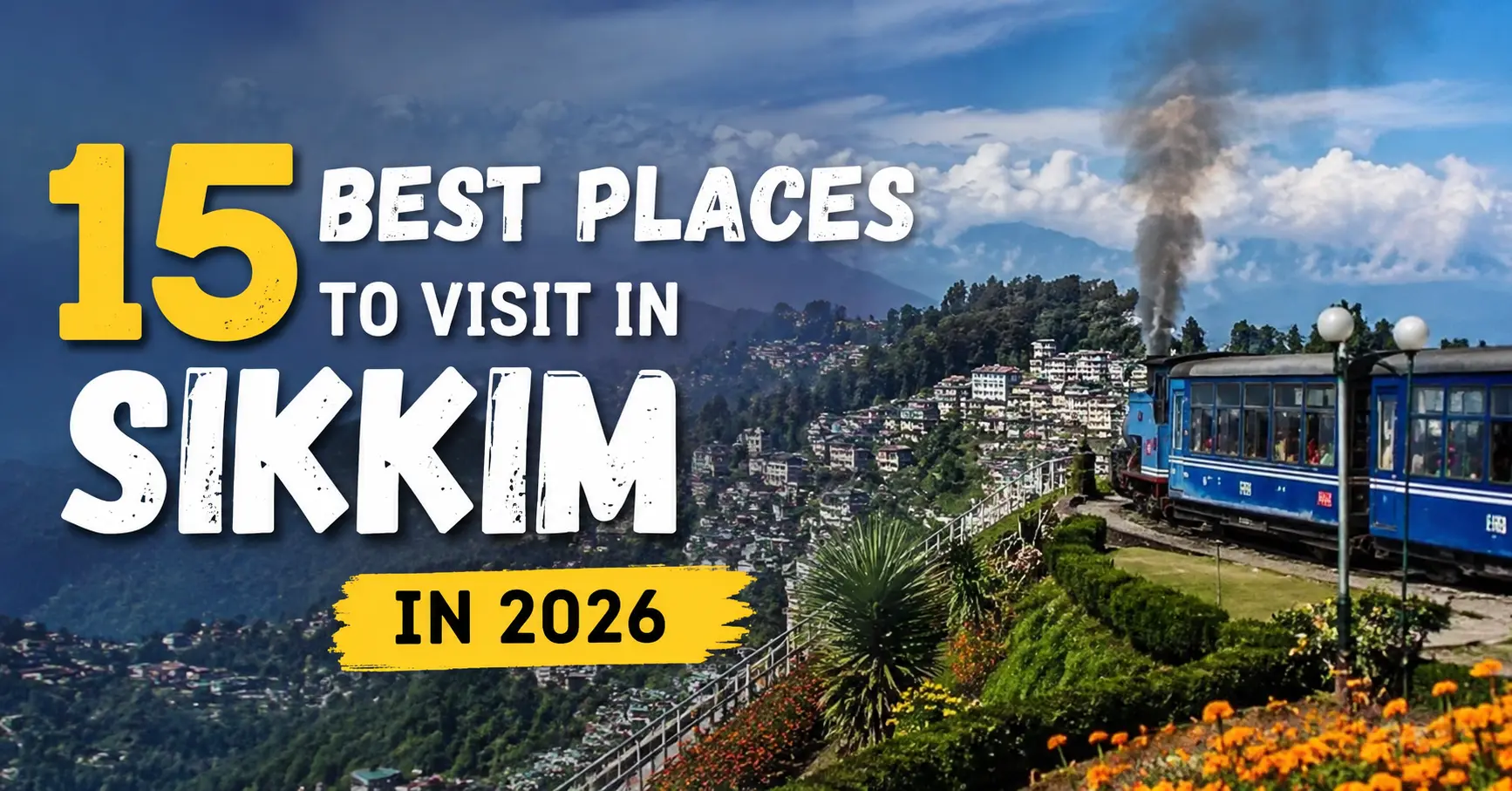
Sikkim slows you down. Furthermore, India’s smallest state by area contains the world’s third-highest mountain, the holiest glacial lake in Buddhism, glass skywalks over Himalayan valleys, and ancient monasteries where monks have prayed for 400 years.
Most notably, the places to visit in Sikkim span all four distinct zones – North, South, East, and West – each delivering a completely different landscape, culture, and emotional experience. As a result, planning a Sikkim trip requires understanding which zone you want before you book anything.
This guide covers all 15 honestly – with zone-by-zone structure, permit requirements, honest package pricing, seasonal advice, and a dedicated couples guide that no competing article currently provides.
What You Will Learn
- The 15 best places to visit in Sikkim organized across all 4 zones
- Sikkim tourist places by permit requirement and accessibility
- Dedicated section on places to visit in North Sikkim
- Places to visit in Sikkim for couples – honeymoon and romantic guide
- Best time to visit Sikkim – honest month-by-month seasonal advice
- Sikkim tourist package options with honest pricing and what they include
Understanding Sikkim’s Four Zones Before You Plan
Sikkim divides into four administrative and tourism zones – North, South, East, and West. Furthermore, each zone requires different permits, offers different landscapes, and suits different traveler types.
Most notably, North Sikkim requires a separate permit from the District Collector. As a result, travelers who arrive without North Sikkim permits miss Gurudongmar Lake and Yumthang Valley entirely – the two most spectacular destinations in the state.
Furthermore, the zones suit different traveler profiles. In particular, East Sikkim suits first-time visitors, North Sikkim suits adventure and altitude seekers, West Sikkim suits culture and monastery lovers, and South Sikkim suits pilgrimage travelers.
East Sikkim: Gangtok and the Classic First-Timer Circuit
East Sikkim houses Gangtok, Sikkim’s capital, and the most accessible high-altitude attractions in the state. Furthermore, East Sikkim requires the easiest permits and suits any fitness level from families to senior travelers.
1. Gangtok: Sikkim’s Capital and Entry Point
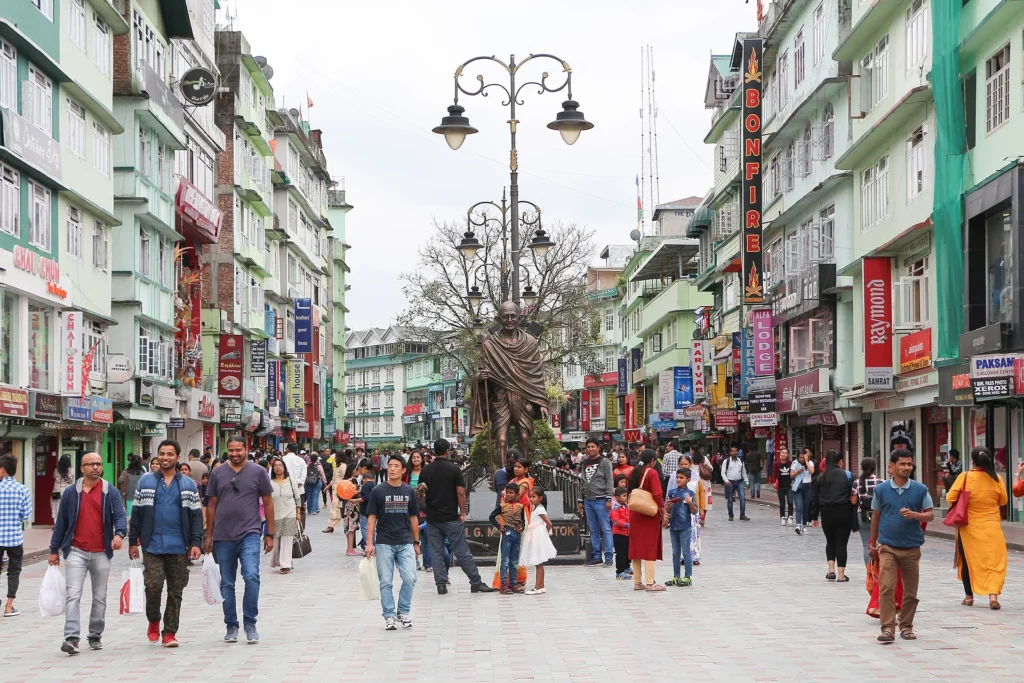
Gangtok serves as the capital and the natural base for all Sikkim exploration. Furthermore, the city sits at 5,500 feet above sea level with Kanchenjunga visible on clear mornings from multiple points along MG Road.
Most notably, Gangtok is where most Sikkim adventures begin – and it’s more than just a stopover. The capital city has a buzzing vibe with cosy cafés, colourful markets, and snow-capped peaks peeking from every corner.
Furthermore, the MG Road pedestrian street, Enchey Monastery, Tashi Viewpoint, and the cable car Ropeway collectively cover a full Gangtok day without requiring a vehicle. As a result, travelers consistently spend 2 nights in Gangtok before proceeding to other zones.
Tashi Point is located in Tashi, 8 kilometers from Gangtok City Centre, at a height of 6000 feet, and from here one gets a beautiful view of the grand Kanchenjunga Mountains. Furthermore, the viewpoint suits sunrise visits most effectively – most notably, arriving at 5:30 AM before dawn clouds build provides the clearest Kanchenjunga views of any Gangtok morning.
- Base location: All tourist zones accessible from Gangtok
- Best time: Year-round, though October to May delivers clearest mountain views
2. Tsomgo (Changu) Lake – East Sikkim (12,400 Feet)
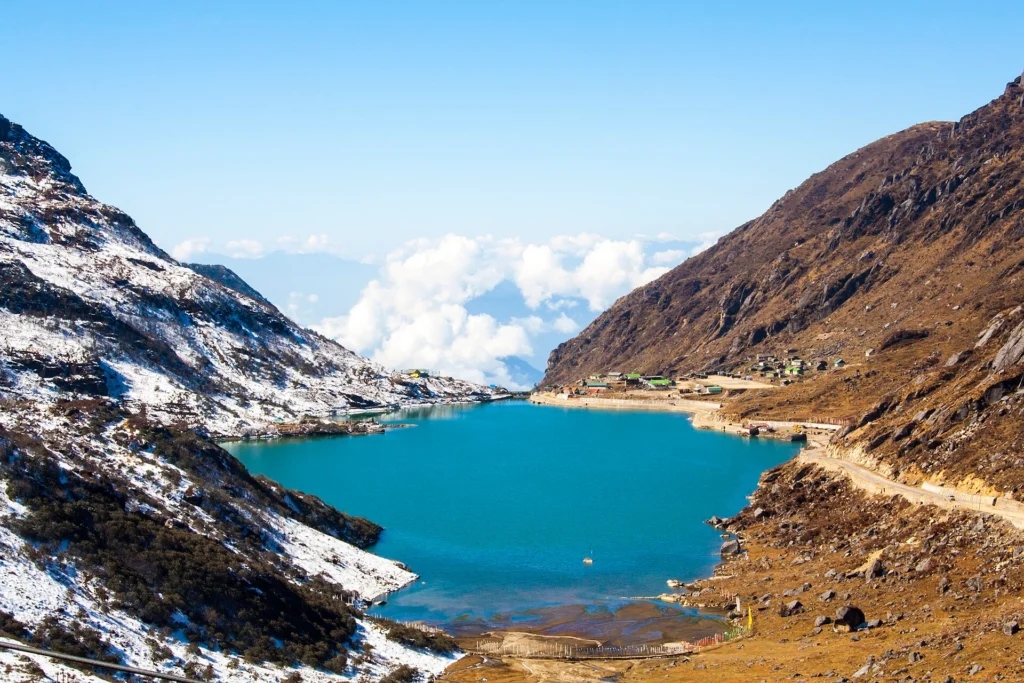
Tsomgo Lake, also known as Changu Lake, is a beautiful glacial lake set among Sikkim’s steep mountains. At a height of 12,400 feet, this idyllic lake is a real gem and a well-liked tourist place in Sikkim.
Furthermore, the lake changes color across seasons – deep blue in summer, turquoise in autumn, and frozen white in winter. Most notably, yak rides around the frozen lake between November and February create the most distinctly Himalayan tourist experience available within the standard East Sikkim permit.
Visitors will have a unique experience at Tsomgo Lake, which is surrounded by snow-capped hills and beautiful alpine forests. As a result, Tsomgo ranks as the most accessible high-altitude lake among all attractions in Sikkim without requiring special military-area documentation.
Travelers obtain the Inner Line Permit (ILP) from Gangtok travel agents in under 2 hours. Furthermore, the permit costs approximately INR 100 and requires 2 passport photos and government ID.
- Distance: 38 km from Gangtok, approximately 1.5 hours by road
- Permit: Inner Line Permit (ILP) mandatory
3. Nathu La Pass – East Sikkim (14,140 Feet)
Nathu La Pass is the world’s most famous and highest motorable road open to travelers. This historic pass is not only a picturesque view of the rocky topography, but more importantly, it looks onto the mesmerizing Chumbi valley.
Furthermore, Indian Army soldiers interact with visiting tourists at the active India-China border post. Most notably, Nathu La provides a genuinely unique geopolitical and landscape experience unavailable at any other Indian tourist destination.
Of the many destinations in Sikkim worth visiting, Nathula Pass is undoubtedly an important tourist location. Visitors to Nathula Pass may visit the border market, talk with Indian Army soldiers, and enjoy the surreal beauty of nearby snow-capped peaks.
- Permit: Separate Nathu La permit required – not included in standard ILP
- Important: Indian nationals only may visit – foreign nationals cannot access this permit
- Season: Open March to November, closes in heavy winter snowfall
4. Rumtek Monastery – East Sikkim
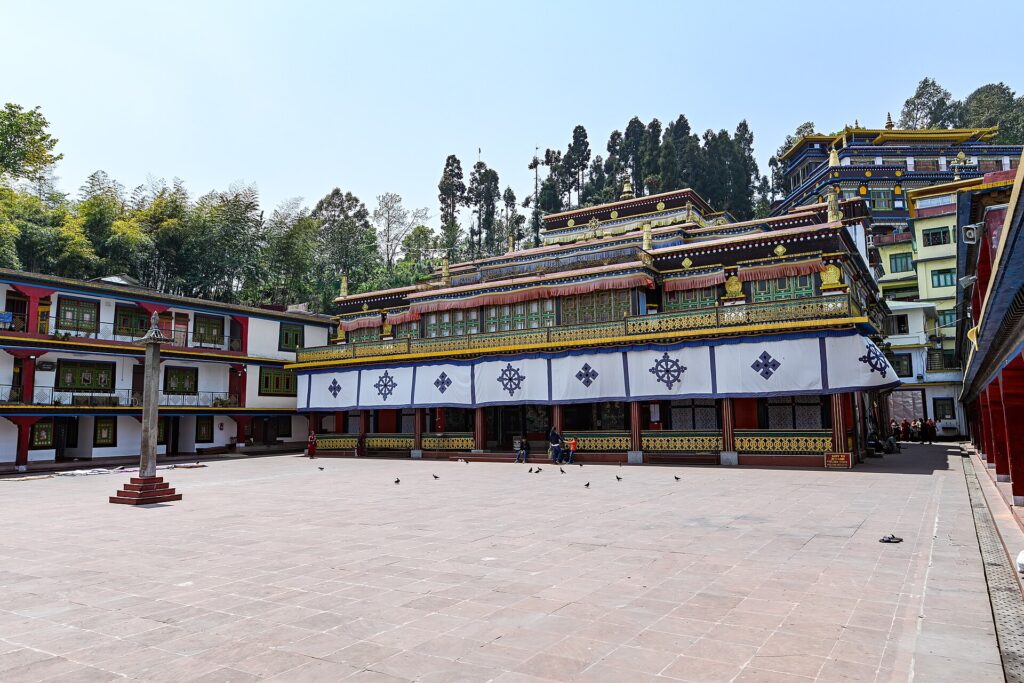
Rumtek Monastery: One of the largest monasteries in Sikkim – peaceful and deeply spiritual. Furthermore, the monastery sits 23 km from Gangtok and houses the Black Hat – one of the most sacred relics in Tibetan Buddhism.
Most notably, the monastery’s ongoing political context between rival Karmapas adds a contemporary layer of historical complexity that deepens the visit beyond standard monastery tourism. As a result, Rumtek provides more intellectual and spiritual depth than any other single monastery in East Sikkim.
- Entry: Free, open 9 AM to 6 PM daily
- Distance: 23 km from Gangtok, approximately 1 hour by road
Places to Visit in North Sikkim: The Crown of the State
North Sikkim houses the most extraordinary high-altitude landscapes in the entire state. Furthermore, the places to visit in North Sikkim require a separate permit – but every traveler who obtains that permit describes the zone as the definitive Sikkim experience.
Most notably, North Sikkim closes entirely during peak monsoon – as a result, planning a North Sikkim visit between April and June or September and December is non-negotiable for reliable access.
5. Gurudongmar Lake – North Sikkim (17,100 Feet)
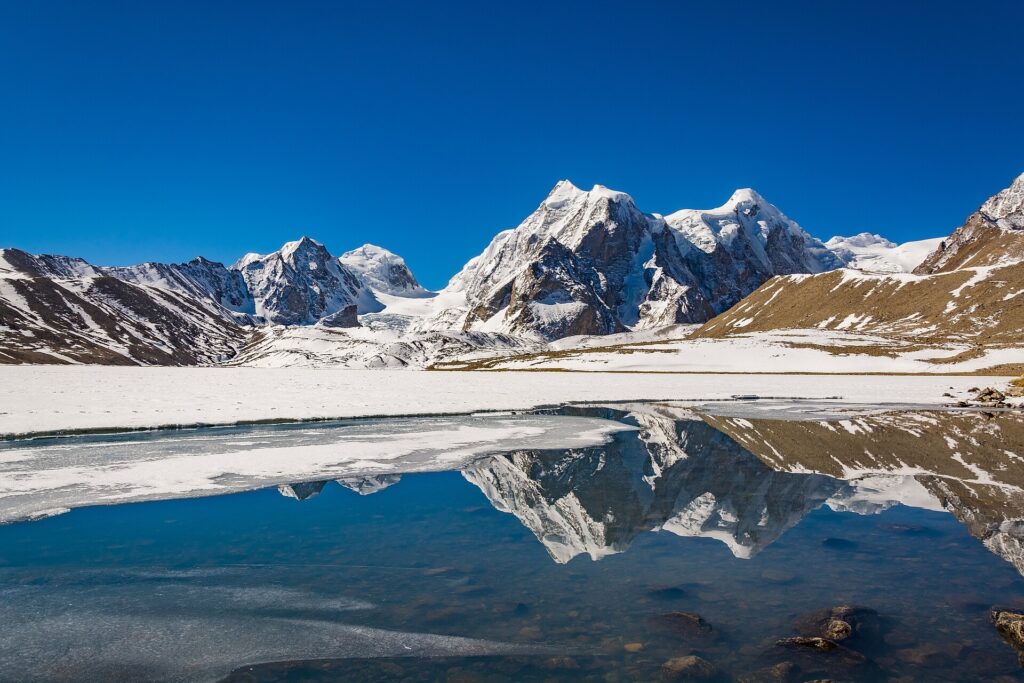
Gurudongmar Lake sits at 17,100 feet in North Sikkim. Furthermore, Tibetan Buddhists and Hindus both revere this glacial lake as among the holiest high-altitude water bodies in Asia.
The sacred Gurudongmar Lake is a color-changing glacial marvel sitting at 17,100 feet in North Sikkim. Most notably, Guru Padmasambhava blessed a small section of the lake that remains unfrozen even in the depths of winter – as a result, pilgrims travel from across India specifically to witness this sacred unfrozen patch.
Furthermore, the drive from Lachen covers 70 km and takes 3 to 4 hours each way. Most notably, the altitude requires genuine acclimatization – most travelers need 2 nights in North Sikkim before attempting the Gurudongmar drive.
- Permit: North Sikkim permit mandatory – obtain in Gangtok before departure
- Restriction: Indian nationals only
- Best season: May to June and September to December
- Altitude caution: Carry personal medication, avoid physical exertion at the lake
6. Yumthang Valley – The Valley of Flowers (11,800 Feet)
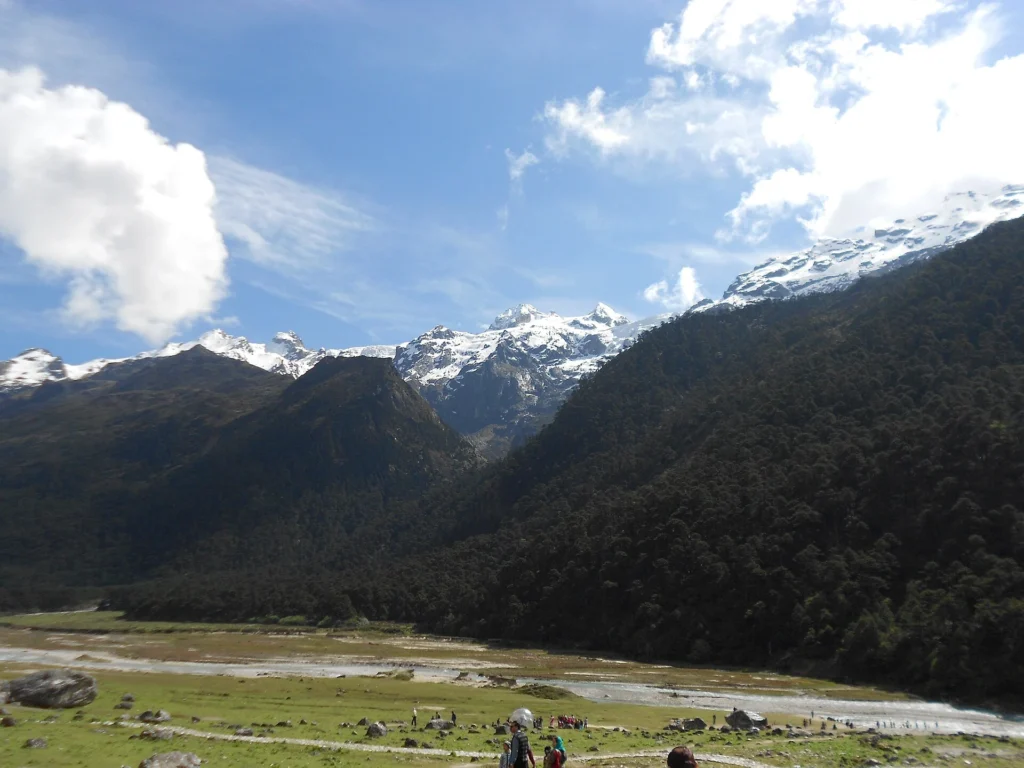
Yumthang Valley sits 148 km north of Gangtok. April to June transforms the valley into the finest rhododendron bloom in all of India with over 24 rhododendron species flowering simultaneously.
Furthermore, the hot springs at Yumthang Village at 11,800 feet are among the highest therapeutic hot springs accessible by road in India. Most notably, soaking in naturally heated spring water while surrounded by snow-capped peaks creates the single most memorable hour of any Sikkim trip.
Mornings are crisp, evenings are cosy, and the air smells faintly of pine and wildflowers. As a result, Yumthang Valley serves as the most visually spectacular experience among all places to visit in North Sikkim during spring season.
- Permit: North Sikkim permit mandatory
- Best month: April for peak rhododendron bloom
- Distance: 148 km from Gangtok, approximately 5 to 6 hours by road
7. Zero Point (Yumesamdong) – North Sikkim (15,300 Feet)
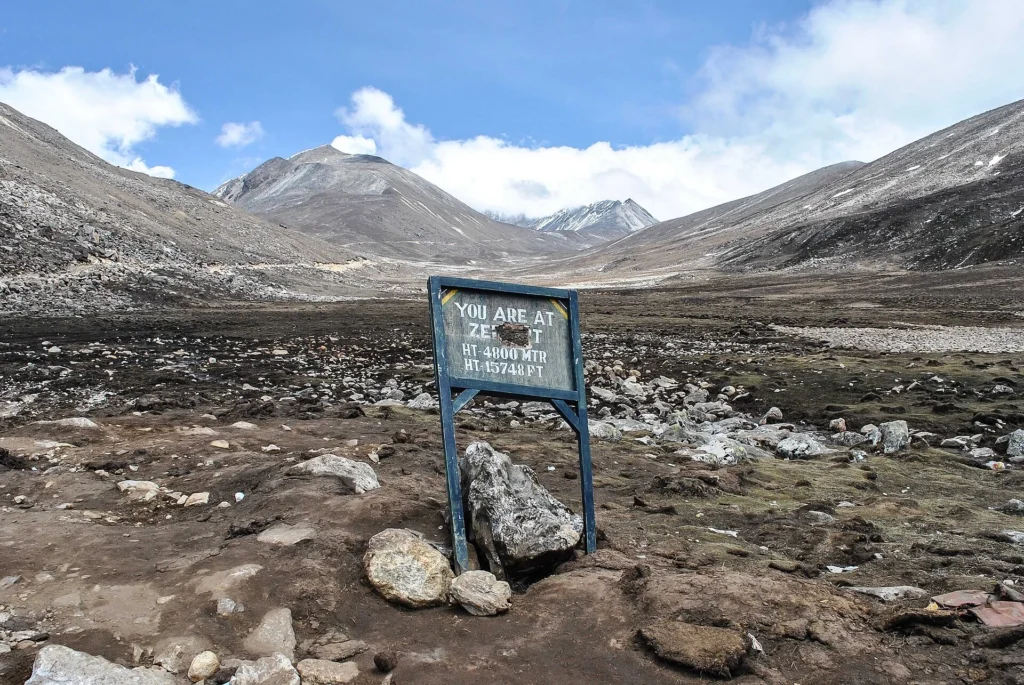
Zero Point sits at 15,300 feet above Yumthang. Furthermore, the Teesta River originates near this permanently snow-covered plateau.
Most notably, Zero Point provides the most dramatic snow landscape accessible by road in Sikkim. As a result, visitors who push beyond Yumthang to Zero Point consistently describe it as the single most extraordinary landscape of their entire Sikkim trip.
Furthermore, the drive from Yumthang covers 25 km of increasingly high and snow-bordered road. Most notably, Zero Point suits visitors who want to experience Himalayan snow without any trekking requirement.
- Permit: Additional permit beyond standard North Sikkim permit – obtain through Lachung registered jeep operators only
- Season: May to December, closed in heavy winter snowfall
8. Lachung Village – North Sikkim (8,900 Feet)
Lachung is a small mountain village governed by a traditional system called the Dzumsa, where village elders resolve disputes. It’s one of the last places in India where this indigenous governance system survives.
Furthermore, the 168-year-old Lachung Monastery provides the finest monastery experience in North Sikkim. Most notably, the combination of Dzumsa governance culture and the ancient monastery creates the richest living cultural experience among all sikkim tourist places in the northern zone.
Located about 118 km from Gangtok – a 5–6 hour scenic drive – Lachung temperatures in May range between 8°C to 20°C. As a result, most North Sikkim packages use Lachung as the overnight base before the Yumthang and Zero Point day excursions.
- Permit: North Sikkim permit mandatory
- Best use: Overnight base for Yumthang and Zero Point day trips
West Sikkim: Pelling, Monasteries and Kanchenjunga Views
West Sikkim requires no separate permit for Indian or foreign visitors. Furthermore, the zone delivers the finest monastery heritage, the glass skywalk, and the most unobstructed Kanchenjunga views of any Sikkim zone accessible to all traveler nationalities.
9. Pelling and the Pelling Skywalk – West Sikkim (7,200 Feet)
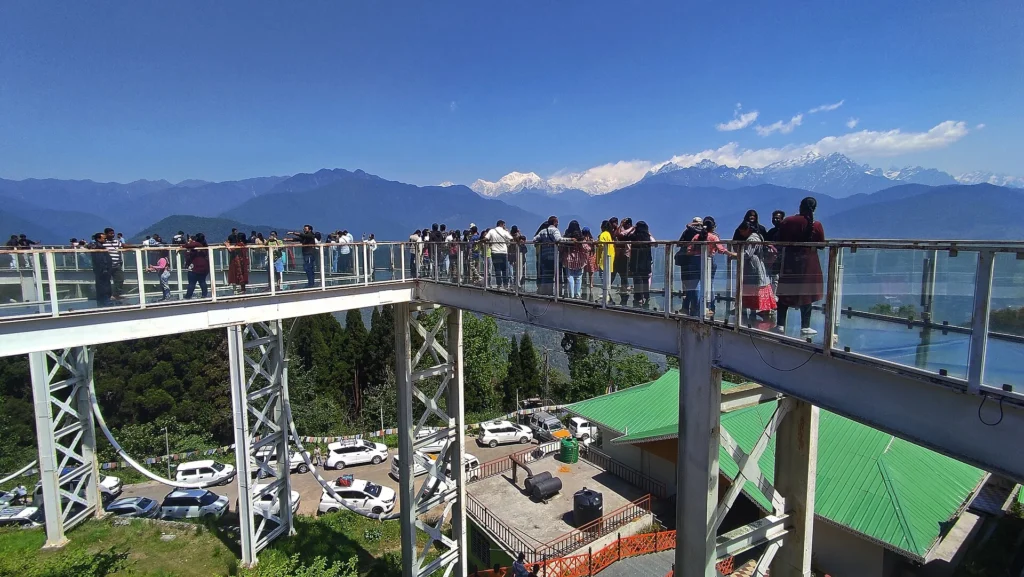
Pelling Skywalk is the first glass skywalk in India, nestled on the top of a hill at a height of 7,200 feet in Western Sikkim. It offers a breathtaking view of the surroundings. In clear weather, it is also possible to view Kanchenjunga from here.
Furthermore, the skywalk connects directly to the 137-foot Chenrezig statue. Most notably, the combined skywalk and statue experience creates the most visually dramatic heritage attraction in all of West Sikkim.
Inside this temple, many sculptures and world-renowned oil paintings can be seen. The vast courtyard of this place is also decorated beautifully with many statues relating to mythology.
- Timings: 8 AM to 5 PM daily
- Entry: Approximately INR 50 to 100 per person
- No permit required: Open to Indian and foreign visitors
10. Rabdentse Ruins – West Sikkim (6,800 Feet)
The Chogyal kings established Rabdentse as the second capital of the Sikkim kingdom – it served as the royal seat from 1670 to 1814. Furthermore, the ruins sit on a ridge with 360-degree views of the Kanchenjunga massif.
Most notably, no other Sikkim heritage site combines this level of royal historical significance with unobstructed mountain views. As a result, Rabdentse consistently surprises visitors who arrive expecting standard ruin archaeology and find instead one of the finest natural viewpoints in West Sikkim.
Furthermore, you’ll rarely see tourists here – most notably, the combination of genuine heritage and low visitor density makes Rabdentse the most underrated among all sikkim tourist places.
- Entry: INR 10 for Indians
- Timings: 8 AM to 4 PM daily
11. Khecheopalri Lake – West Sikkim (6,900 Feet)
Khecheopalri Lake sits 28 km from Pelling. Furthermore, Buddhists and Hindus both regard it as the “Wish Fulfilling Lake” – the holiest lake in all of Sikkim across both religious traditions.
Most notably, birds reportedly remove every fallen leaf from the lake’s surface – as a result, the lake remains perfectly clear throughout the year. Local tradition attributes this phenomenon to divine protection, and the lake’s mirror surface in early morning genuinely supports the claim.
Furthermore, the forest walk to the lake from the parking area takes approximately 15 minutes through deodar trees draped in prayer flags. Most notably, this approach walk prepares visitors for the sacred atmosphere in a way that arriving directly at a main entrance cannot replicate.
- Entry: Free, open from sunrise to sunset
- Distance: 28 km from Pelling, approximately 45 minutes by road
South Sikkim: Namchi and the Statue Circuit
South Sikkim requires no separate permit and suits spiritual travelers most directly. Furthermore, the zone delivers two of the finest large-format religious monuments in Northeast India within comfortable driving distance of each other.
12. Namchi and Char Dham Replica – South Sikkim
Namchi houses an 87-foot Guru Padmasambhava statue alongside replicas of all four Char Dham pilgrimage sites. Furthermore, the complex serves as a major pilgrimage destination for Buddhists and Hindus across Northeast India.
Most notably, the complex also includes replicas of all 12 Jyotirlingas. As a result, devotees who cannot physically reach the original pilgrimage sites complete a symbolic full-circuit at this single South Sikkim destination in one visit.
Furthermore, the hilltop setting at Namchi provides panoramic views across South Sikkim’s valleys. Most notably, the Guru Padmasambhava statue is visible from several km before reaching the site – creating the strongest visual approach of any South Sikkim attraction.
- Entry: INR 20 per person
- Timings: 9 AM to 7 PM daily
Planning a North India pilgrimage extension? Read our complete Char Dham Yatra guide to plan the original four sacred sites across the Himalayas.
13. Ravangla and Buddha Park – South Sikkim (7,000 Feet)
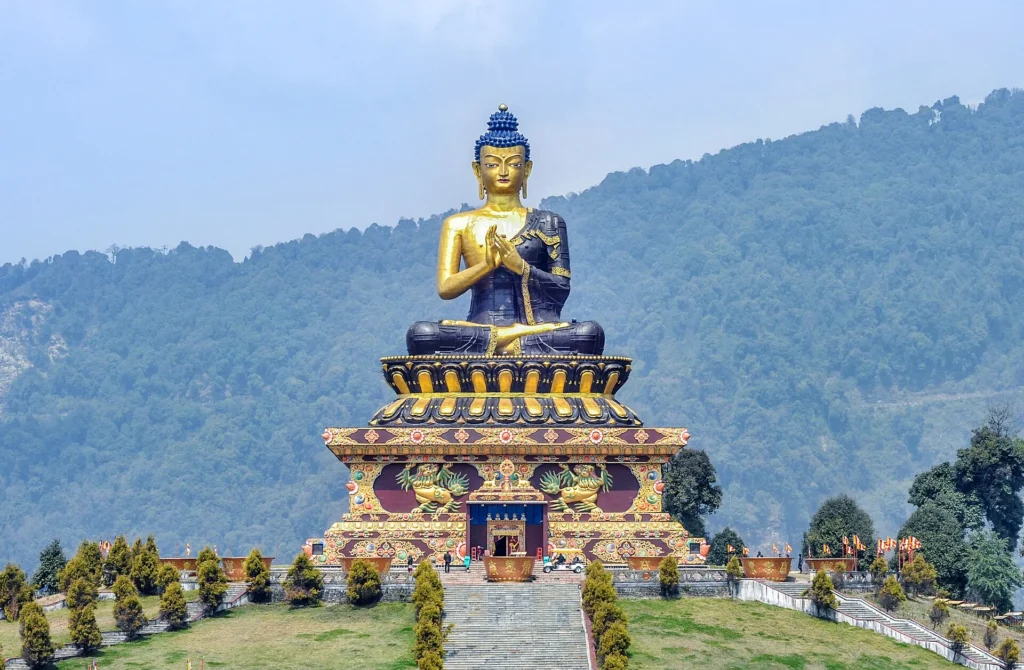
Ravangla sits at 7,000 feet between Gangtok and Pelling. Furthermore, the Tathagata Tsal – Buddha Park – houses a 130-foot seated Buddha statue visible from 30 km away across the valley.
Most notably, the park provides the finest panoramic view of the entire South Sikkim horizon from any hilltop in the zone. As a result, Ravangla suits the late afternoon visit when the Kanchenjunga turns pink at golden hour behind the seated Buddha.
Furthermore, Ravangla’s position between Gangtok and Pelling makes it a natural midpoint stop on any Complete Sikkim circuit route. Most notably, drivers familiar with the South Sikkim roads recommend combining Namchi and Ravangla in a single day for maximum efficiency.
- Entry: INR 10 per person
- Timings: 8 AM to 6 PM daily
Adventure Activities in Sikkim
14. Teesta River Rafting – East Sikkim
The Teesta River flows through East Sikkim and offers Grade 3 to Grade 4 white water rafting between Makha village and Sirwani. Furthermore, the 23 km stretch takes approximately 2 to 3 hours through genuinely dramatic river canyon scenery.
Most notably, the rafting season runs from October to May. As a result, monsoon season between June and September closes Teesta rafting completely due to dangerously high and unpredictable water levels.
Furthermore, registered Gangtok operators include rafting in multi-day packages or book it as a standalone activity. Most notably, the stretch passes beneath overhanging cliffs and through Himalayan foothills that no road in Sikkim follows.
- Cost: Approximately INR 700 to 1,200 per person
- Season: October to May only
15. Dzongri Trek – West Sikkim (13,000 Feet)
The Dzongri Trek begins from Yuksom in West Sikkim and reaches 13,000 feet. Furthermore, trekkers enjoy direct Kanchenjunga face views available from no roadside vantage point anywhere in Sikkim.
Best time to visit: March to June, September to December. Most notably, the Dzongri summit at 13,000 feet on a clear April morning provides the closest Kanchenjunga view accessible without technical mountaineering equipment anywhere in India.
Furthermore, the Singalila Ridge extension along the Sikkim-Nepal border provides the finest multi-day Himalayan trekking experience accessible from Sikkim. Most notably, trekking permits require a minimum group of 2 persons – solo trekking is not permitted in Sikkim.
- Permit: Trekking permit required, minimum 2 persons mandatory
- Best season: April to June and October to December
- Duration: 5 to 7 days for the full Dzongri circuit
Places to Visit in Sikkim for Couples: Honeymoon and Romance Guide
The places to visit in Sikkim for couples reward planning around specific seasonal windows. Furthermore, Sikkim’s romantic experiences combine natural spectacle, altitude stillness, and cultural intimacy in ways that standard Indian hill stations cannot replicate.
Most Romantic Places in Sikkim
Tsomgo Lake in winter creates a genuinely extraordinary shared experience. Furthermore, yak rides across the snow-covered frozen surface between November and February provide a cinematic Himalayan moment unavailable at any other Indian destination at this altitude.
Most notably, Yumthang Valley during the April rhododendron bloom creates the most romantically cinematic landscape in all of Sikkim. Additionally, the valley of flowers experience – surrounded by snow-capped peaks while rhododendrons bloom in vivid red and pink – provides the strongest visual memory of any Sikkim couple experience.
Khecheopalri Lake at sunrise rewards early-rising couples. Furthermore, the early morning mist on the perfectly still sacred lake creates an atmosphere of complete quiet that afternoon visits cannot replicate.
Most notably, Ravangla’s Buddha Park at golden hour consistently generates the strongest couple travel memory – watching Kanchenjunga turn pink at sunset from the park viewpoint produces a shared visual experience that most photographs fail to fully capture.
Honeymoon Sikkim Tourist Package Tips
Most couples book a 6 to 7 day sikkim tourist package covering Gangtok, Tsomgo, Nathu La, Yumthang, Pelling, and Ravangla. Furthermore, honeymoon packages from Gangtok typically cost INR 15,000 to 35,000 per couple depending on hotel category.
Most notably, booking through Gangtok-registered operators provides mandatory permit assistance. As a result, couples avoid the most common Sikkim planning mistake – arriving without the correct zone permits.
Booking your Sikkim honeymoon hotel? Read how to reserve your Sikkim hotel with zero prepayment for maximum booking flexibility.
Sikkim Tourist Package: Honest Guide to Pricing and What’s Included
The Sikkim tourist package market is large and pricing varies dramatically. Furthermore, understanding what each package tier includes prevents significant disappointment on arrival.
Standard Package Options
| Package Type | Duration | Zones Covered | Approximate Cost Per Person |
| Basic Gangtok-only | 3 nights 4 days | East Sikkim | INR 5,000 to 8,000 |
| Classic Sikkim | 5 nights 6 days | East and North | INR 10,000 to 18,000 |
| Complete Sikkim | 7 nights 8 days | All 4 zones | INR 18,000 to 32,000 |
| Luxury Honeymoon | 6 nights 7 days | East, North, West | INR 25,000 to 50,000 |
Furthermore, all packages must include permit procurement. Most notably, operators who do not include permits create significant checkpost problems that disrupt the entire itinerary.
What Standard Packages Include
Airport or station pickup from Bagdogra or NJP is the starting point. Furthermore, the 4-hour transfer from Bagdogra to Gangtok covers some of the finest Himalayan foothills scenery of any pre-destination journey in India.
Accommodation on a double-sharing basis forms the core of the package. Most notably, Gangtok provides the widest accommodation range – INR 800 to INR 12,000 per night – as a result, specifying the hotel category clearly before booking prevents the most common package disappointment.
All permits for covered zones are included. Furthermore, permit fees are nominal at INR 100 to 200 per person – most notably, the processing through registered operators eliminates the document complexity that individual travelers struggle with.
Combining Sikkim with a Haridwar trip? Read our Chardham tour from Haridwar guide to plan a complete North India Himalayan itinerary.
Sikkim Permit Requirements: Complete Reference
Zone-Wise Permit Guide
| Zone | Permit Required | Who Can Get It | Where to Obtain | Cost |
| East Sikkim (Tsomgo) | Inner Line Permit (ILP) | All Indian nationals | Gangtok agents, Siliguri, online | INR 100 |
| Nathu La Pass | Nathu La Permit (separate) | Indian nationals only | Gangtok registered operators | INR 200 |
| North Sikkim | North Sikkim Permit | Indian nationals only | District Collector, Gangtok or agent | INR 100 |
| West Sikkim | None required | All visitors | Not required | Free |
| South Sikkim | None required | All visitors | Not required | Free |
Most notably, foreign nationals cannot access North Sikkim or Nathu La. As a result, international travelers plan exclusively around East, West, and South Sikkim zones – which still provide 8 of the 15 attractions in this guide.
Furthermore, permits require 2 passport-size photographs and valid government ID. Most notably, registered Gangtok operators process all permits within 2 to 4 hours when travelers arrive with documents already prepared.
Best Time to Visit Sikkim: Month-by-Month Guide
| Season | Months | Best For | Honest Assessment |
| Spring | Mar to May | Best overall | Rhododendron bloom, all zones open, clear skies |
| Pre-monsoon | Jun | Yumthang green peak | Rising humidity, still mostly accessible |
| Monsoon | Jul to Sep | Avoid most zones | Landslides frequent, North Sikkim often closed |
| Autumn | Oct to Nov | Second best | Clear mountain views, Dzongri trek season |
| Winter | Dec to Feb | Snow experiences | Tsomgo frozen, Nathu La accessible, cold nights |
Why March to May Is the Best Time to Visit Sikkim
March to May delivers the rhododendron bloom at Yumthang, clear Kanchenjunga views, and all four zones fully operational. Furthermore, all North Sikkim roads reopen after winter closures by mid-March.
Sikkim in May is, without question, one of the best times to visit this Himalayan gem. With daytime temperatures between 16°C and 24°C, rhododendrons painting valleys in vivid reds and pinks, trekking trails freshly reopened, and the spiritual energy of the Saga Dawa festival in the air, May offers the perfect blend of nature, adventure, and culture.
Most notably, April specifically combines maximum flower bloom with comfortable daytime temperatures. As a result, April ranks as the single finest month for a first Sikkim visit by any travel metric.
Honest Monsoon Warning
July to September brings heavy monsoon to Sikkim. Furthermore, the Teesta River frequently floods the NH10 highway between Siliguri and Gangtok – as a result, road closures during monsoon can strand travelers for 24 to 48 hours.
Most notably, North Sikkim closes entirely in heavy monsoon. As a result, travelers who arrive without confirming road conditions risk spending their entire trip in Gangtok alone.
That said, the post-monsoon September to October window provides the most dramatically green Himalayan landscape of the entire year. Furthermore, October also delivers the clearest mountain views of any month – most notably, Kanchenjunga visibility in October mornings regularly exceeds 100 km of visual range.
How to Reach Sikkim
By Air
Bagdogra Airport (IXB) near Siliguri in West Bengal serves as the nearest airport to Sikkim. Furthermore, Delhi, Kolkata, Mumbai, and Ahmedabad all have direct flights to Bagdogra.
Most notably, the Bagdogra to Gangtok shared jeep covers 124 km in approximately 3.5 to 4.5 hours through the Teesta Valley. As a result, most travelers arrive in Gangtok in time for a half-day evening city orientation on the same day as their flight.
By Train
New Jalpaiguri (NJP) Railway Junction is the nearest major station. Furthermore, trains from Delhi, Kolkata, Mumbai, and Chennai all serve NJP directly.
Most notably, the NJP to Gangtok shared jeep takes 4 to 5 hours via NH10 through the Teesta Valley. As a result, overnight train travel from Kolkata arriving at NJP by morning delivers travelers in Gangtok by early afternoon.
Sikkim has no railway line. As a result, all internal travel within the state requires road vehicles – most notably, this means package jeep services are not optional but essential for zone-to-zone movement.
Quick Reference: All 15 Sikkim Places at a Glance
| # | Place | Zone | Altitude | Permit | Best Season |
| 1 | Gangtok | East | 5,500 ft | None | Year-round |
| 2 | Tsomgo Lake | East | 12,400 ft | ILP | Oct to May |
| 3 | Nathu La Pass | East | 14,140 ft | Nathu La | Mar to Nov |
| 4 | Rumtek Monastery | East | 5,200 ft | None | Year-round |
| 5 | Gurudongmar Lake | North | 17,100 ft | North Sikkim | May to Jun, Sep to Dec |
| 6 | Yumthang Valley | North | 11,800 ft | North Sikkim | Apr to Jun |
| 7 | Zero Point | North | 15,300 ft | Extra permit | May to Jun |
| 8 | Lachung Village | North | 8,900 ft | North Sikkim | Year-round |
| 9 | Pelling Skywalk | West | 7,200 ft | None | Year-round |
| 10 | Rabdentse Ruins | West | 6,800 ft | None | Year-round |
| 11 | Khecheopalri Lake | West | 6,900 ft | None | Year-round |
| 12 | Namchi Char Dham | South | 5,430 ft | None | Year-round |
| 13 | Ravangla Buddha Park | South | 7,000 ft | None | Year-round |
| 14 | Teesta River Rafting | East | 1,800 ft | None | Oct to May |
| 15 | Dzongri Trek | West | 13,000 ft | Trek permit | Apr to Jun, Oct to Dec |
Attractions in Sikkim by Traveler Type
| Traveler Type | Top Picks | Key Tip |
| First-time visitors | Gangtok, Tsomgo, Nathu La, Rumtek | East Sikkim permits are quick and easy |
| Adventure seekers | Dzongri Trek, Zero Point, Teesta Rafting | Book October to May for best conditions |
| Spiritual pilgrims | Gurudongmar, Khecheopalri, Namchi, Rumtek | Carry extra permit photos always |
| Couples and honeymooners | Tsomgo winter, Yumthang April, Ravangla sunset | Book 6 to 7 day package with operator |
| Nature photographers | Yumthang April, Zero Point, Rabdentse | April morning light on Kanchenjunga |
| Cultural travelers | Lachung Dzumsa, Rabdentse, Gangtok MG Road | West and North Sikkim focus |
| Foreign travelers | Gangtok, Pelling, Ravangla, Rumtek | North Sikkim and Nathu La not available |
Conclusion
The places to visit in Sikkim span all four zones – from Gangtok’s vibrant hill-town energy to Gurudongmar Lake’s sacred altitude silence. Furthermore, no other Indian state compresses this range of Himalayan landscape, Buddhist culture, adventure, and spiritual geography into an area reachable in one 4-hour jeep ride from the airport.
Most notably, 2026 brings strong booking demand for North Sikkim. As a result, obtaining permits and booking Lachung accommodation 4 to 6 weeks ahead is no longer optional – it is the difference between experiencing Yumthang and watching other travelers leave for it from your Gangtok hotel window.
Get the permits before you need them. Book North Sikkim accommodation early. Visit in April.
Above all, let Gurudongmar Lake be the last thing on your itinerary – because arriving there after ten days in Sikkim makes the sacred lake make complete sense in a way that arriving on Day 1 never could.