Twelve places in India claim something no other religious sites claim quite the same way. Furthermore, tradition holds that Lord Shiva manifested at each as a Jyotirlinga, a blazing pillar of infinite light that pierced through the earth.
Most notably, the famous Lord Shiva temples in India span from a Himalayan shrine reachable only six months a year to a coastal Gujarat temple destroyed and rebuilt across centuries. Together, they form Hinduism’s most significant Shaivite pilgrimage circuit.
This guide covers all 12 honestly, with legends, timings, a ranked popularity comparison, and the practical planning details most competing guides skip.
What You Will Learn
- All 12 famous Lord Shiva temples in India, their locations and legends
- Which is the most popular jyotirlinga by footfall and significance
- Best time to visit each famous shiv mandir in India
- How to plan a multi-state Jyotirlinga pilgrimage realistically
- Famous Shiva temples beyond the Jyotirlingas worth knowing
- Temple etiquette and practical yatra tips
What Makes a Temple a Jyotirlinga?
The Shiva Purana describes Lord Shiva manifesting as an infinite column of light, a Jyoti Stambha, that pierced through the three worlds. Furthermore, the twelve sites where this light reportedly touched earth became the twelve Jyotirlingas.
Most notably, these twelve temples spread across eight Indian states, from the Himalayas to the southern coastline. As a result, no single Indian pilgrimage circuit demands more geographic range than a complete Jyotirlinga yatra.
The 12 Famous Lord Shiva Temples in India
1. Somnath, Gujarat
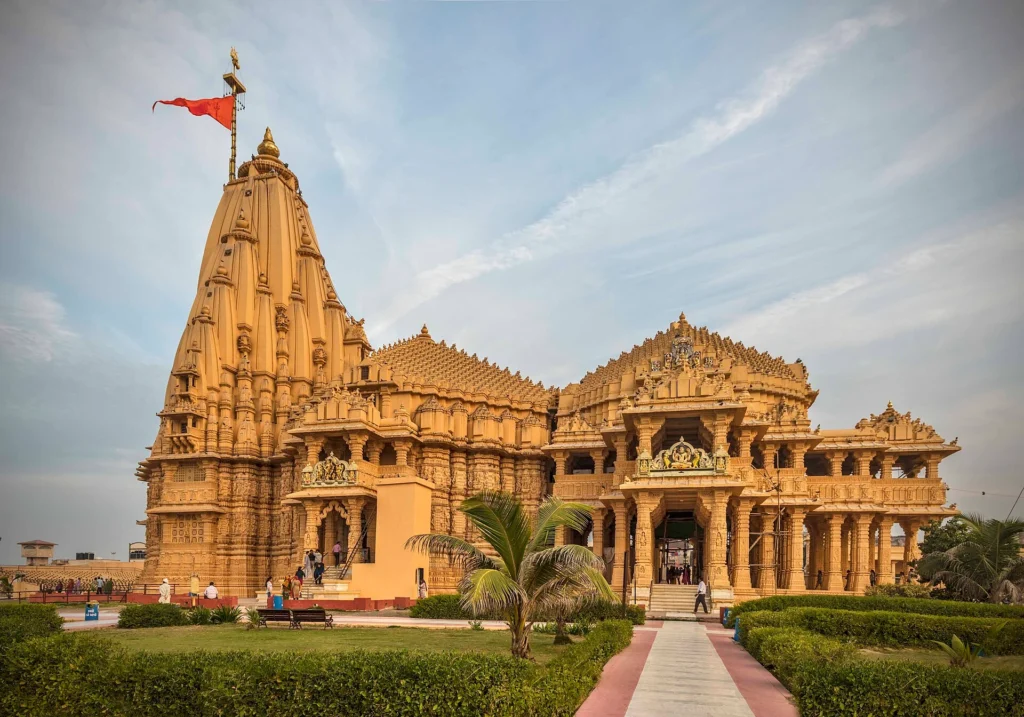
Legend holds that Chandra, the Moon God, built the original Somnath temple to seek Shiva’s forgiveness after a curse. Furthermore, invaders destroyed and looted the temple multiple times across history.
Most notably, the current structure stands as a symbol of resilience, rebuilt in its ancient glory on the Arabian Sea shore.
- Best time to visit: October to March
- Special attraction: An evening light and sound show narrates the temple’s history
2. Mallikarjuna, Andhra Pradesh
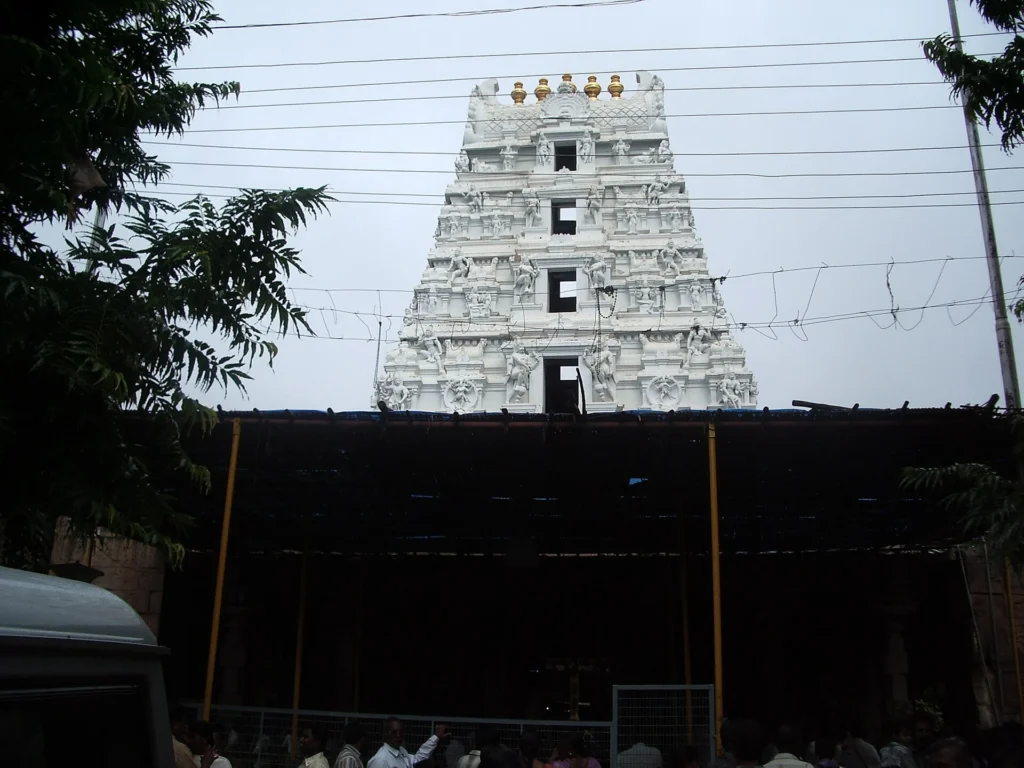
The Mallikarjuna temple sits in Srisailam on the Krishna River, earning the nickname Kailash of the South. Furthermore, it holds the rare distinction of being both a Jyotirlinga and a Shakti Peetha.
Most notably, legend connects the site to Shiva and Parvati visiting to console their son Kartikeya, who chose the surrounding hills as his home.
- Best time to visit: October to February
3. Mahakaleshwar, Ujjain
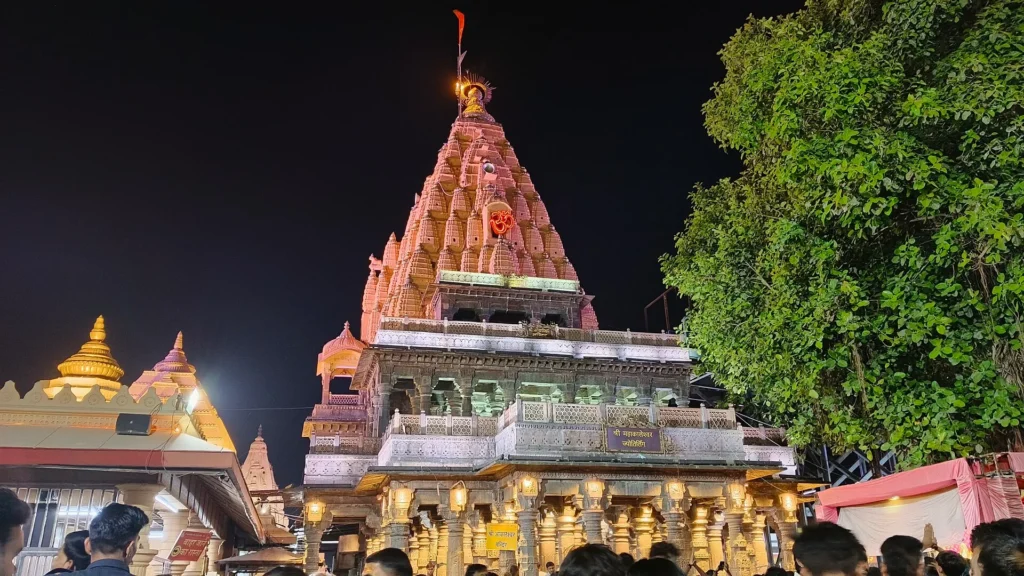
Devotees consider Mahakaleshwar unique for its south-facing lingam, known as dakshinamukhi. Furthermore, priests perform the famous Bhasma Aarti every morning at 4 AM using sacred ash.
Most notably, tradition holds that Shiva appeared here as Mahakal, Lord of Time, to protect devotees from a demon named Dushana.
- Best time to visit: October to March
4. Omkareshwar, Madhya Pradesh
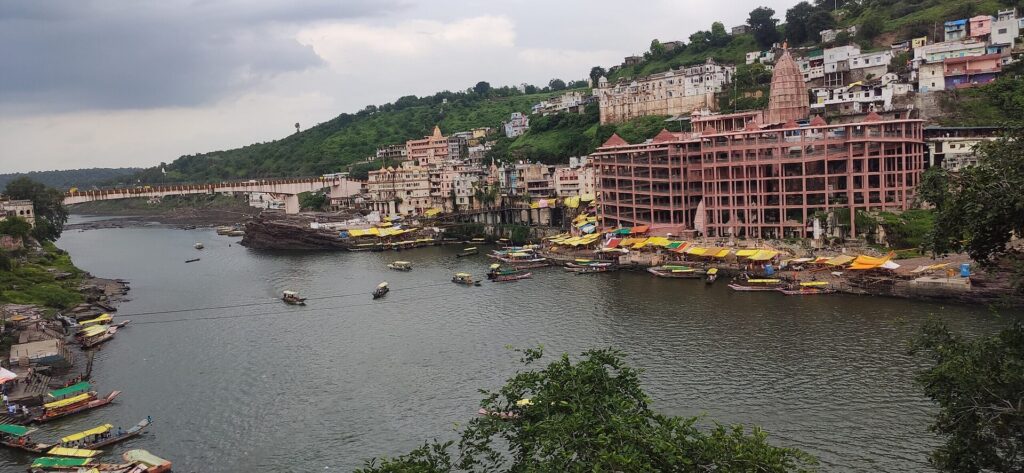
Omkareshwar sits on Mandhata Island in the Narmada River, an island shaped like the sacred Om symbol. Furthermore, the temple divides into two shrines, Omkareshwar and Amaleshwar, symbolizing dual divine nature.
Most notably, a boat ride around the island lets devotees experience the temple’s unique riverine setting from every angle.
- Best time to visit: October to March
5. Kedarnath, Uttarakhand
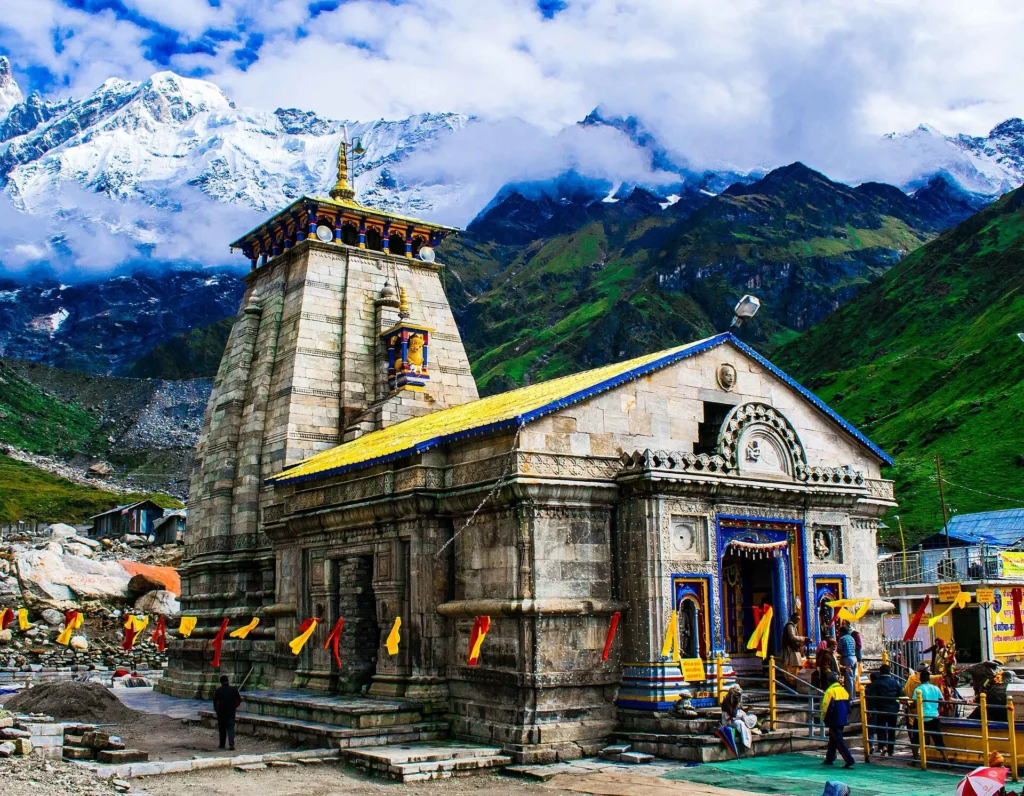
Kedarnath sits at 3,583 metres in the Himalayas as part of the Char Dham pilgrimage. Furthermore, the Pandavas reportedly built the temple to seek forgiveness after the Kurukshetra war.
Most notably, Kedarnath opens only between May and October due to extreme Himalayan weather.
- Travel tip: Trek or helicopter access available from Gaurikund
Planning the full Himalayan circuit? Read our complete Char Dham Yatra guide to plan Kedarnath alongside the other three sacred sites.
6. Bhimashankar, Maharashtra
Legend connects Bhimashankar to Shiva defeating the demon Tripurasura. Furthermore, dense forest surrounds the temple as part of a designated wildlife sanctuary.
Most notably, this combination of spiritual and ecological significance makes Bhimashankar unique among the 12 famous Lord Shiva temples in India.
- Best time to visit: October to February
7. Kashi Vishwanath, Varanasi
Devotees consider Kashi Vishwanath the most sacred among all Jyotirlingas. Furthermore, tradition holds that a visit here combined with a dip in the Ganga grants moksha, or liberation.
Most notably, the temple has faced repeated invasions and reconstructions, most recently rebuilt in 1780 by Maharani Ahilyabai Holkar. As a result, Kashi Vishwanath consistently ranks as the most popular jyotirlinga by annual footfall.
- Experience: The Ganga Aarti at Dashashwamedh Ghat nearby is a must-see evening ritual
8. Trimbakeshwar, Nashik
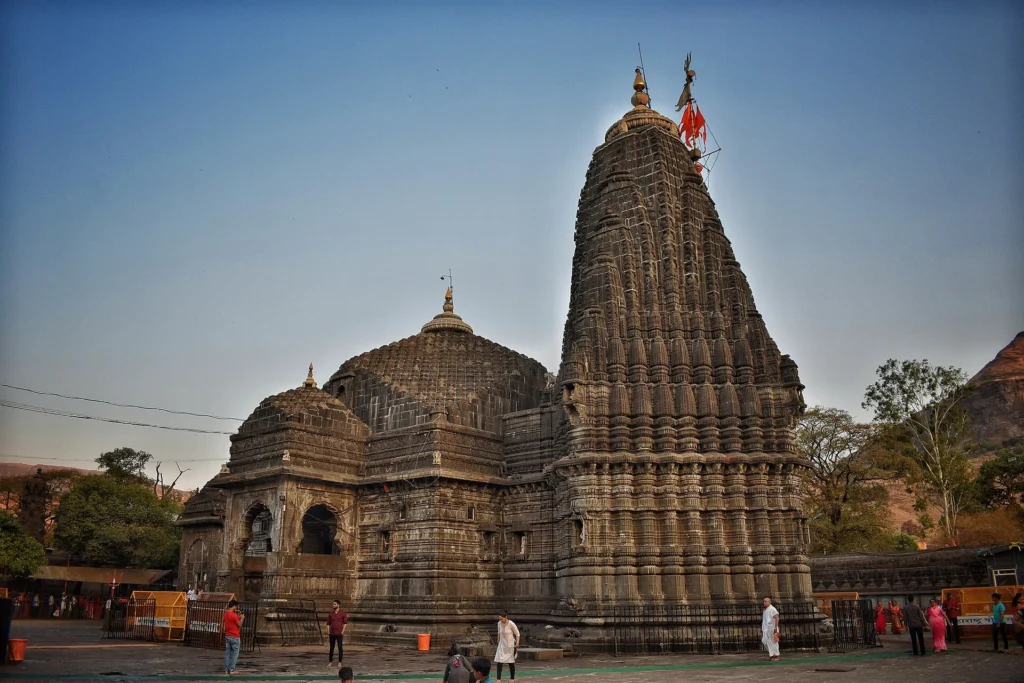
Trimbakeshwar sits near Nashik at the source of the sacred Godavari River. Furthermore, its lingam uniquely features three faces representing Brahma, Vishnu, and Shiva.
Most notably, the temple plays a central role in the Nashik Kumbh Mela, one of India’s largest religious gatherings.
- Best time to visit: October to February
9. Vaidyanath, Deoghar
Also known as Baidyanath Dham, this Jharkhand temple carries strong healing associations. Furthermore, legend holds that Ravana offered his ten heads to Shiva here to gain divine power.
Most notably, the Shravan month brings the Kanwar Yatra, when pilgrims walk for days carrying holy Ganga water to the temple.
- Best time to visit: October to March, though Shravan (July-August) draws the largest crowds
- Pro tip: Combine this trip with the nearby Ajanta and Ellora Caves
10. Nageshwar, Dwarka
The Nageshwar temple sits about 20 minutes from Dwarka city centre. Furthermore, tradition holds that Shiva emerged here to protect his devotee Supriya from the demon Daruka.
Most notably, the temple features a massive Shiva statue visible from a distance, making it instantly recognizable among famous shiv mandir sites in India.
- Best time to visit: October to March
11. Rameshwaram, Tamil Nadu
Rameshwaram closely connects to the Ramayana. Furthermore, tradition holds that Lord Rama himself installed the lingam here after his victory over Ravana.
Most notably, this coastal temple doubles as one of the four sacred Char Dhams of Hinduism, drawing both Shaivite and Vaishnavite pilgrims.
- Best time to visit: October to March for cooler, less humid conditions
12. Grishneshwar, Aurangabad
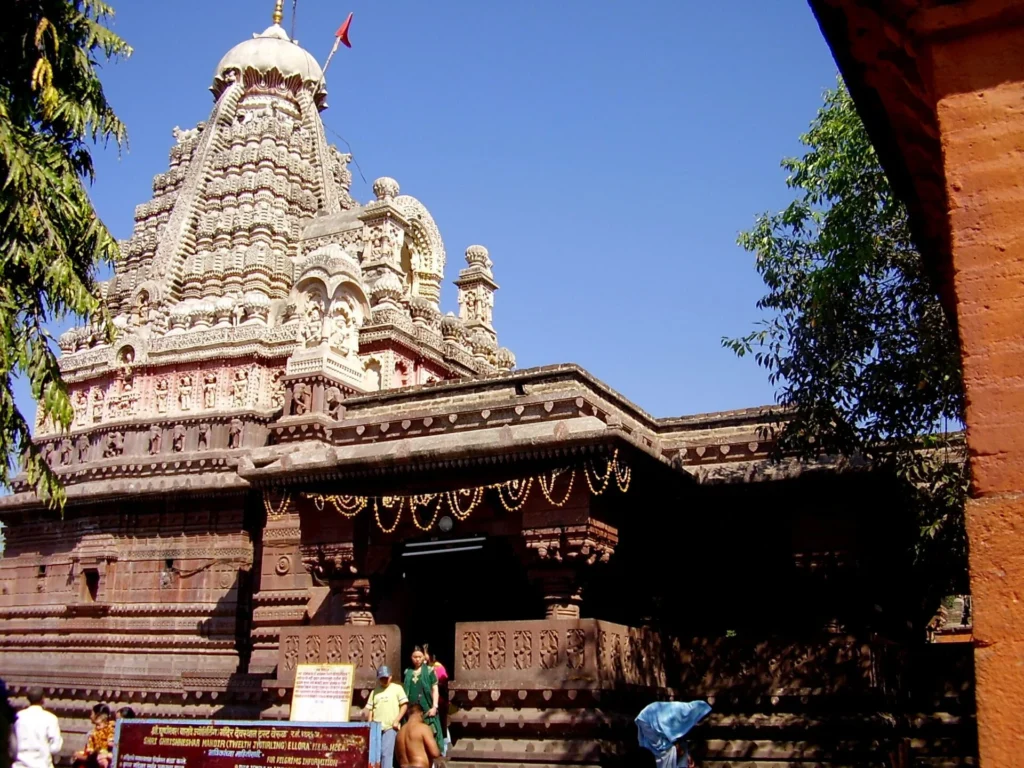
Grishneshwar ranks as the smallest of the 12 Jyotirlinga temples. Furthermore, it sits just a few kilometres from the UNESCO World Heritage Ellora Caves.
Most notably, legend credits the temple’s sanctity to Ghushma, a devotee whose unwavering faith moved Shiva to bless the site.
- Best time to visit: October to March
Most Popular Jyotirlinga: A Footfall and Significance Comparison
Kashi Vishwanath sees the highest annual footfall of all 12 famous Lord Shiva temples in India. Furthermore, its location in Varanasi, combined with the Ganga’s spiritual pull, makes it the natural first stop for most devotees.
Most notably, Somnath and Kedarnath follow closely, drawing massive crowds particularly during Shravan and Mahashivratri. As a result, first-time pilgrims planning a partial yatra should prioritize Kashi Vishwanath, Somnath, and Kedarnath if time or budget limits a full 12-temple circuit.
| Rank | Temple | Why It Leads |
| 1 | Kashi Vishwanath | Highest annual footfall, moksha significance |
| 2 | Somnath | Historic resilience, coastal accessibility |
| 3 | Kedarnath | Char Dham status, dramatic Himalayan setting |
| 4 | Mahakaleshwar | Unique Bhasma Aarti draws devoted crowds |
| 5 | Vaidyanath | Massive Shravan month pilgrimage surge |
Famous Shiva Temples in India Beyond the Jyotirlingas
Amarnath, though not a Jyotirlinga, ranks among the most challenging and revered Shiva pilgrimages in India. Furthermore, the naturally formed ice lingam inside a Himalayan cave draws lakhs of devotees each summer.
Most notably, the Tilbhandeshwar Mahadev Temple in Varanasi and the Maha Mrityunjay Temple, also in Varanasi, both carry significant devotional followings despite standing outside the official 12. As a result, devotees searching for a famous shiv temple in India should not limit their pilgrimage exclusively to the Jyotirlinga list.
Planning a Complete Jyotirlinga Yatra
A complete 12-temple Jyotirlinga yatra typically requires 20 to 30 days. Furthermore, a faster trip is possible, though a slower journey allows more rest and calmer darshan at each site.
Most notably, Maharashtra alone houses three Jyotirlingas, Bhimashankar, Trimbakeshwar, and Grishneshwar, letting pilgrims cover a significant cluster in one regional trip. As a result, mapping routes by state cluster, rather than visiting in mythological order, saves considerable travel time.
Regional Clustering Strategy
- Maharashtra cluster: Bhimashankar, Trimbakeshwar, Grishneshwar
- Gujarat cluster: Somnath, Nageshwar
- Madhya Pradesh cluster: Mahakaleshwar, Omkareshwar
- Remaining standalone temples: Kedarnath (Uttarakhand), Kashi Vishwanath (Uttar Pradesh), Vaidyanath (Jharkhand), Mallikarjuna (Andhra Pradesh), Rameshwaram (Tamil Nadu)
Extending your Kedarnath trip? Read our guide on places to visit in Uttarakhand to build a complete regional itinerary.
Best Time to Visit: A Complete Seasonal Table
| Temple | Best Time to Visit |
| Somnath | October to March |
| Mallikarjuna | October to February |
| Mahakaleshwar | October to March |
| Omkareshwar | October to March |
| Kedarnath | May to June, September to October (opens seasonally) |
| Bhimashankar | October to February |
| Kashi Vishwanath | October to March |
| Trimbakeshwar | October to February |
| Vaidyanath | October to March (avoid Shravan for smaller crowds) |
| Nageshwar | October to March |
| Rameshwaram | October to March |
| Grishneshwar | October to March |
Most notably, October to March suits nearly every temple on this list except Kedarnath, which follows a strict seasonal opening. As a result, planning a yatra around this window covers 11 of the 12 famous Lord Shiva temples in India comfortably.
Mahashivratri: The Best and Busiest Time to Visit
Mahashivratri draws the single largest crowds of the year at nearly every famous shiv mandir in India. Furthermore, Mahakaleshwar and Kashi Vishwanath see queues extending for hours during this festival.
Most notably, devotees seeking a spiritually intense but crowded experience should specifically target Mahashivratri, while those preferring quieter darshan should visit a few weeks before or after.
Planning around the festival? Read our guide on places to celebrate Maha Shivratri for more festival-specific temple recommendations.
Temple Etiquette and Practical Yatra Tips
Map out your route by region rather than mythological sequence to reduce travel time significantly. Furthermore, avoid monsoon season for hill temples like Kedarnath and Bhimashankar specifically.
Download offline maps and temple guides beforehand, since some areas have limited internet access. Carry an easy-to-remove pair of slippers, since temples do not permit shoes inside.
Pack lightweight clothing, a basic first-aid kit, and reusable water bottles. Most notably, dress modestly and respect local customs, avoiding photography where restricted.
Book darshan tickets in advance where available. As a result, reaching temples early morning consistently produces shorter queues and a calmer darshan experience.
Planning your pilgrimage stay? Read how to reserve your accommodation with zero prepayment for maximum flexibility.
Quick Reference: All 12 Famous Lord Shiva Temples
| # | Temple | State | Special Feature |
| 1 | Somnath | Gujarat | Rebuilt multiple times, coastal setting |
| 2 | Mallikarjuna | Andhra Pradesh | Also a Shakti Peetha |
| 3 | Mahakaleshwar | Ujjain, MP | South-facing lingam, Bhasma Aarti |
| 4 | Omkareshwar | Madhya Pradesh | Island shaped like Om |
| 5 | Kedarnath | Uttarakhand | Part of Char Dham, seasonal access |
| 6 | Bhimashankar | Maharashtra | Wildlife sanctuary setting |
| 7 | Kashi Vishwanath | Uttar Pradesh | Highest footfall, moksha significance |
| 8 | Trimbakeshwar | Maharashtra | Three-faced lingam, Godavari source |
| 9 | Vaidyanath | Jharkhand | Healing significance, Kanwar Yatra |
| 10 | Nageshwar | Gujarat | Massive Shiva statue |
| 11 | Rameshwaram | Tamil Nadu | Also a Char Dham |
| 12 | Grishneshwar | Maharashtra | Smallest Jyotirlinga, near Ellora Caves |
Looking for places to stay along your route? Browse our hotels and resorts guide for your yatra.
Conclusion
The famous Lord Shiva temples in India carry a weight that goes beyond architecture or tourism. Furthermore, from Kashi Vishwanath’s promise of liberation to Kedarnath’s Himalayan silence, each Jyotirlinga offers a genuinely distinct spiritual encounter.
Most notably, few pilgrims complete all 12 in a single trip, and that is perfectly fine.
Start with the cluster nearest you. Above all, let the yatra unfold across years rather than weeks.